
Central bank minutes provide deeper clues
For the casual forex trader, central bank minutes often appear as dense bureaucratic documents best left to economists and academics. For the moderately active investor who understands how forex trading works, however, these minutes are among the most powerful tools for anticipating price action before it happens. The relationship between economic news and currency movements is rarely straightforward, but central bank minutes offer something the headline numbers cannot: the reasoning behind the decisions. Understanding this reasoning is the difference between reacting to the market and positioning ahead of it.
How Forex Trading Works: Beyond Exchange Rates
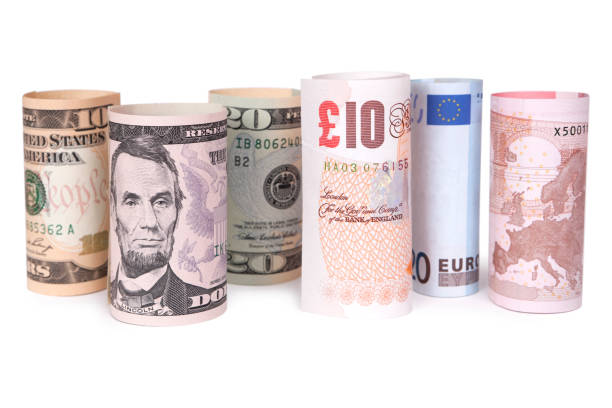
To grasp why central bank minutes matter, you must first understand how forex trading actually operates. Unlike stock trading, where you buy shares of a company, forex trading is the simultaneous purchase of one currency and sale of another. Every trade is a pair. When you buy EUR/USD, you are betting that the euro will strengthen relative to the dollar. This sounds simple, but the forces driving these relative values are complex. Currencies move based on interest rate differentials, capital flows, trade balances, and most importantly, expectations about future monetary policy. The market does not trade on what is happening now. It trades on what traders believe will happen six to twelve months from now. This is where central bank minutes become indispensable.
The Minutes Versus the Statement
When a central bank like the Federal Reserve or the European Central Bank makes an interest rate decision, it releases a brief policy statement. This statement gives the headline change and a short explanation. But the minutes, released approximately three weeks later, provide a detailed account of the discussions, disagreements, and concerns among voting members. For the forex trader, this is gold. The statement tells you what happened. The minutes tell you why it happened and what might happen next.
Consider a scenario where the Fed holds rates steady but the accompanying statement sounds cautious. The market might interpret this as dovish, and the dollar could sell off. But when the minutes are released, you might discover that several members were pushing for a rate hike and were only narrowly outvoted. This completely changes the narrative. The cautious statement was a compromise, not a signal of weakness. The minutes reveal the underlying hawkish pressure, and an alert trader can use this information to position long on the dollar before the next meeting delivers a surprise.
How Price Action Reacts to Economic News
Price action in forex is not random. It follows patterns driven by how news aligns with expectations. When economic data releases, such as GDP or employment numbers, hit the wires, the immediate reaction is often violent but short-lived. Smart traders know that the real movement comes from the subsequent reinterpretation of that data in the context of central bank policy. Central bank minutes provide that context directly from the source.
For example, if non-farm payrolls come in strong but the Fed minutes later reveal that members are worried about inflation being too sticky, the initial dollar strength might reverse. The minutes act as a secondary catalyst that either confirms or contradicts the market’s initial reaction. Traders who ignore the minutes are trading blind to the central bank’s internal dynamics. They are reacting to noise while missing the signal.
Reading Between the Lines for Specific Clues
Advanced traders look for specific language in minutes that signals a shift. Words matter. If the minutes shift from describing inflation as “transitory” to “persistent,” that is a major hawkish signal. If they stop saying “accommodative” and start saying “data-dependent,” the bank is signaling uncertainty. If they use the word “patience,” expect no changes soon. If they remove “patience,” a move is coming.
The minutes also reveal dissenting votes. A single dissenter in favor of a rate change can be ignored. Two or three dissenters signal a shift in sentiment that will likely materialize in the next meeting. The forex market prices this in gradually, creating trends that last weeks rather than minutes. This is where the money is made. Not in scalping the immediate news release, but in riding the wave of changing expectations that the minutes initiate.
A Practical Approach for the Moderate Trader
You do not need to read every page of every central bank minutes document. Focus on the summary of the discussion and the voting record. Compare the language to the previous release. If the tone is more hawkish, buy the currency. If it is more dovish, sell it. But do not trade the release itself. The minutes often cause initial whipsaws as algorithms digest the text. Wait fifteen to thirty minutes for the noise to settle, then look for the directional bias that emerges.
Remember that all currencies are traded in pairs. A hawkish Fed is not just bullish the dollar; it is bearish everything else. If the European Central Bank minutes are dovish while the Fed minutes are hawkish, the EUR/USD pair has a powerful dual driver. One central bank is tightening while the other is easing. That divergence creates the strongest trends in forex.
Conclusion
Central bank minutes are not optional reading for serious forex traders. They are the single most reliable source of advanced insight into future price action. Economic news tells you what happened. The minutes tell you what the people who control the money are thinking about what will happen next. If you understand how forex trading works as a forward-looking market, you understand that the minutes are your roadmap. Ignore them at your peril. Use them, and you trade with the central bankers rather than against them.