
- USD-JPY 158.45 (+0.22 )
- GBP-USD 1.2985 (+0.0008 )
- USD-CHF 0.8842 (-0.0005 )
- AUD-USD 0.6754 (-0.0021 )
- USD-CAD 1.3688 (+0.0015 )
- NZD-USD 0.6123 (-0.0018 )
- EUR-JPY 173.05 (+0.1 )
- GBP-JPY 205.74 (+0.35 )
- EUR-GBP 0.8410 (-0.0019 )
- AUD-JPY 107.03 (-0.15 )
- EUR-CHF 0.9656 (-0.0008 )
- USD-CNY 7.2514 (+0.0002 )
- USD-HKD 7.8055 (+0.0001 )
- USD-SGD 1.3442 (+0.0004 )
- USD-SEK 10.5521 (+0.021 )
- USD-NOK 10.7435 (+0.0315 )
- USD-DKK 6.9452 (+0.004 )
- GBP-CHF 1.1481 (+0.0003 )
- AUD-CAD 0.9244 (-0.0022 )
- CAD-JPY 115.76 (+0.08 )
- NZD-JPY 97.02 (-0.05 )
- CHF-JPY 179.20 (+0.25 )
- EUR-CAD 1.4948 (+0.0005 )
- GBP-CAD 1.7773 (+0.0025 )
- AUD-CHF 0.5972 (-0.002 )
- NZD-CHF 0.5414 (-0.0016 )
- CAD-CHF 0.6460 (-0.0004 )
- EUR-AUD 1.6170 (+0.0015 )
- GBP-AUD 1.9225 (+0.0045 )
- EUR-NZD 1.7836 (+0.002 )
- GBP-NZD 2.1206 (+0.005 )
- AUD-NZD 1.1030 (-0.0005 )
- USD-MXN 17.6520 (+0.051 )
- USD-ZAR 18.2540 (-0.082 )
- USD-TRY 33.1550 (+0.024 )
- USD-INR 83.6210 (+0.011 )
- USD-BRL 5.4820 (-0.031 )
- USD-KRW 1378.45 (+2.15 )
- USD-PLN 3.9650 (-0.005 )
- USD-HUF 362.45 (+0.85 )
- USD-CZK 23.1250 (+0.035 )
- USD-ILS 3.6840 (-0.008 )
- USD-CLP 945.20 (+2.1 )
- USD-PHP 58.75 (+0.12 )
- USD-THB 36.15 (+0.05 )
- USD-IDR 16180.00 (+25 )
- USD-MYR 4.6850 (-0.002 )
- USD-VND 25450.00 (+5 )
- USD-RUB 88.50 (+0.25 )
- EUR-MXN 19.1365 (+0.025 )
- EUR-ZAR 19.7750 (-0.11 )
- EUR-TRY 35.9150 (+0.045 )
- EUR-PLN 4.2980 (-0.006 )
- EUR-HUF 392.85 (+0.65 )
- EUR-CZK 25.0560 (+0.015 )
- GBP-MXN 22.7750 (+0.065 )
- GBP-ZAR 23.5420 (-0.12 )
- GBP-TRY 42.7560 (+0.085 )
- GBP-PLN 5.1180 (-0.002 )
- AUD-CNY 4.9015 (-0.012 )
- AUD-HKD 5.2725 (-0.015 )
- AUD-SGD 0.9078 (-0.0025 )
- CAD-CNY 5.2975 (+0.008 )
- CAD-HKD 5.6980 (+0.005 )
- CAD-SGD 0.9815 (+0.0012 )
- NZD-CNY 4.4395 (-0.011 )
- NZD-HKD 4.7750 (-0.014 )
- NZD-SGD 0.8226 (-0.0022 )
- CHF-CNY 8.1990 (-0.004 )
- CHF-HKD 8.8185 (-0.0035 )
- CHF-SGD 1.5185 (-0.0005 )
- JPY-CNY 0.0458 (-0.0001 )
- JPY-HKD 0.0493 (-0.0001 )
- JPY-SGD 0.0085 (-0.0001 )
- EUR-SGD 1.4682 (-0.001 )
- GBP-SGD 1.7458 (+0.0015 )
- EUR-HKD 8.5285 (-0.009 )
- GBP-HKD 10.1385 (+0.0055 )
- EUR-CNY 7.9195 (-0.008 )
- GBP-CNY 9.4185 (+0.005 )
- USD-SAR 3.7505 (+0 )
- USD-AED 3.6730 (+0 )
- USD-QAR 3.6410 (+0.0001 )
- USD-KWD 0.3065 (+0.0001 )
- EUR-SAR 4.0955 (-0.0045 )
- EUR-AED 4.0115 (-0.0044 )
- GBP-SAR 4.8705 (+0.003 )
- GBP-AED 4.7715 (+0.003 )
- AUD-SAR 2.5325 (-0.008 )
- AUD-AED 2.4810 (-0.0078 )
- CAD-SAR 5.1295 (+0.0055 )
- CAD-AED 5.0255 (+0.0055 )
- NZD-SAR 2.2965 (-0.0068 )
- NZD-AED 2.2495 (-0.0066 )
- CHF-SAR 3.3155 (-0.0018 )
- CHF-AED 3.2475 (-0.0018 )
- JPY-SAR 0.0237 (+0.0001 )
- JPY-AED 0.0232 (+0.0001 )
- EUR-DKK 7.4585 (-0.0005 )
Choose leverage based on risk tolerance
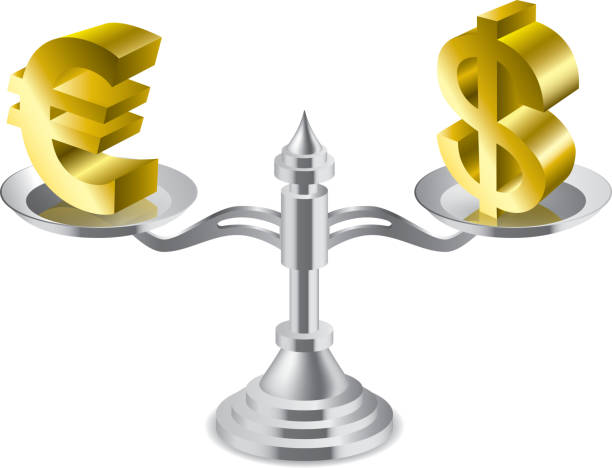
Leverage in forex trading is often misunderstood as a tool for multiplying gains, but its true function is to determine the size of your position relative to your account equity. The decision to use 10:1, 50:1, or even 100:1 leverage is not a matter of ambition but of calculated risk tolerance. If you approach leverage without a clear understanding of your own capacity to withstand drawdowns, you are effectively gambling with capital that should be deployed with precision. The central question every trader must answer is not how much leverage is available, but how much leverage your psychological and financial profile can sustain without triggering catastrophic losses.
Risk tolerance is the single most important variable in choosing leverage because it defines the maximum adverse movement you can endure before a margin call erases your position. A trader with a low risk tolerance, meaning they cannot accept a drawdown beyond five percent of their account, should never use leverage higher than 10:1. At 10:1, a one percent move against your position results in a ten percent loss of equity, which already exceeds the five percent threshold. Pushing to 20:1 would double that exposure. Conversely, a trader with a high risk tolerance, who can accept temporary drawdowns of twenty percent or more, might justify using 50:1 leverage, but only if they have a strict stop-loss strategy and the discipline to honor it. The key is not to ask what the market might do, but what you can survive. The market will do what it does; your leverage must match your staying power.
The mechanics of margin reinforce this relationship. Margin is the collateral required to open and maintain a leveraged position. At 50:1 leverage, the margin requirement is typically two percent of the notional trade size. This means a $1,000 account can control $50,000 in currency. While that seems attractive, the flip side is that a two percent adverse move against your position wipes out your entire margin. If your risk tolerance is low, even a two percent swing could trigger a margin call, forcing you to close at a loss. The margin call is not a suggestion; it is a hard stop. Leverage magnifies both the speed and severity of losses, and margin requirements ensure that you cannot simply wait out a bad trade unless your account is significantly overcapitalized. Therefore, choosing leverage requires you to calculate the maximum probable daily volatility of the currency pair you are trading. If EUR/USD moves an average of 0.8 percent per day, and you use 50:1 leverage, a two-day adverse move of 1.6 percent would consume eighty percent of your margin. That is unsustainable for most traders.
Sophisticated traders do not think about leverage in isolation but in relation to position sizing and risk per trade. A common advanced strategy is to use higher leverage on smaller positions, effectively reducing overall exposure. For example, a trader with a $10,000 account and a low risk tolerance might use 50:1 leverage but only risk one percent of their account per trade, meaning they open a position worth $10,000 rather than $500,000. The leverage is not fully utilized; it is held in reserve. This approach gives the trader flexibility to scale in or manage margin requirements without overextending. The opposite mistake is to max out leverage on a large position, which amplifies risk exponentially. Risk tolerance determines not just the leverage ratio but the percentage of available margin you are willing to commit at any one time. A prudent trader never uses more than ten to twenty percent of available margin, regardless of the maximum leverage their broker offers.
Another advanced consideration is the relationship between leverage and volatility. Pairs like USD/JPY or GBP/JPY exhibit higher intraday volatility than EUR/CHF. If your risk tolerance is moderate, using the same leverage on a highly volatile pair versus a stable pair is a miscalculation. You must adjust leverage downward for volatile instruments. A trader comfortable with 30:1 on EUR/USD might need to drop to 15:1 on GBP/JPY to maintain the same risk-adjusted exposure. This adjustment is not optional; it is a direct function of your tolerance for drawdown. The market will not warn you before a volatility spike, but your margin account will reflect it immediately.
Ultimately, the choice of leverage is a statement about your trading philosophy. If you prioritize capital preservation, low leverage with wide stops and longer timeframes is appropriate. If you seek quick, frequent gains and can accept the possibility of large losses, higher leverage may fit, but only if you have a proven edge and strict exit rules. The most dangerous traders are those who use high leverage because they are impatient or because they want to compensate for a small account. That mindset leads to ruin. Leverage should amplify your strategy, not compensate for its weaknesses. Evaluate your risk tolerance honestly, calculate maximum adverse movement, and set your leverage accordingly. The market will test that decision repeatedly, and only those who match leverage to temperament will survive.


Currency Quotes
EUR-USD


Current
1.0921Change
-0.0012
USD-JPY

Current
158.45Change
+0.22
GBP-USD

Current
1.2985Change
+0.0008
USD-CHF

Current
0.8842Change
-0.0005
AUD-USD

Current
0.6754Change
-0.0021
USD-CAD

Current
1.3688Change
+0.0015
NZD-USD

Current
0.6123Change
-0.0018
EUR-JPY
Current
173.05Change
+0.1
GBP-JPY
Current
205.74Change
+0.35
EUR-GBP
Current
0.8410Change
-0.0019
AUD-JPY
Current
107.03Change
-0.15
EUR-CHF
Current
0.9656Change
-0.0008
USD-CNY

Current
7.2514Change
+0.0002
USD-HKD

Current
7.8055Change
+0.0001
USD-SGD

Current
1.3442Change
+0.0004
USD-SEK

Current
10.5521Change
+0.021
USD-NOK

Current
10.7435Change
+0.0315
USD-DKK

Current
6.9452Change
+0.004
GBP-CHF
Current
1.1481Change
+0.0003
AUD-CAD
Current
0.9244Change
-0.0022
CAD-JPY
Current
115.76Change
+0.08
NZD-JPY
Current
97.02Change
-0.05
CHF-JPY
Current
179.20Change
+0.25
EUR-CAD
Current
1.4948Change
+0.0005
GBP-CAD
Current
1.7773Change
+0.0025
AUD-CHF
Current
0.5972Change
-0.002
NZD-CHF
Current
0.5414Change
-0.0016
CAD-CHF
Current
0.6460Change
-0.0004
EUR-AUD
Current
1.6170Change
+0.0015
GBP-AUD
Current
1.9225Change
+0.0045
EUR-NZD
Current
1.7836Change
+0.002
GBP-NZD
Current
2.1206Change
+0.005
AUD-NZD
Current
1.1030Change
-0.0005
USD-MXN

Current
17.6520Change
+0.051
USD-ZAR

Current
18.2540Change
-0.082
USD-TRY

Current
33.1550Change
+0.024
USD-INR

Current
83.6210Change
+0.011
USD-BRL

Current
5.4820Change
-0.031
USD-KRW

Current
1378.45Change
+2.15
USD-PLN

Current
3.9650Change
-0.005
USD-HUF

Current
362.45Change
+0.85
USD-CZK

Current
23.1250Change
+0.035
USD-ILS

Current
3.6840Change
-0.008
USD-CLP

Current
945.20Change
+2.1
USD-PHP

Current
58.75Change
+0.12
USD-THB

Current
36.15Change
+0.05
USD-IDR

Current
16180.00Change
+25
USD-MYR

Current
4.6850Change
-0.002
USD-VND

Current
25450.00Change
+5
USD-RUB

Current
88.50Change
+0.25
EUR-MXN
Current
19.1365Change
+0.025