
Compare Forex to stocks and crypto
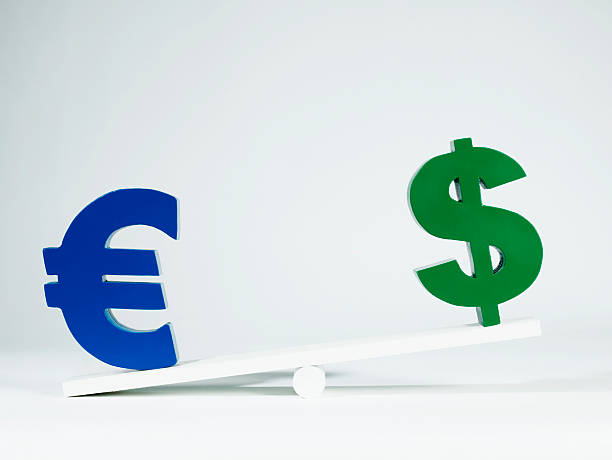
For the casual investor, the choice between Forex, stocks, and cryptocurrency might seem like a matter of personal preference or risk tolerance. But for the retail trader who has moved beyond beginner myths and actually examines market mechanics, the decision is far more strategic. The foreign exchange market, despite its reputation for complexity, offers structural advantages that stocks and crypto simply cannot replicate for the active, moderately capitalized individual. Understanding these differences is essential if you want to trade currencies safely and profitably—not just gamble on volatility.
Let us start with the underlying nature of each asset class. Stocks represent equity in a company. When you buy a share of Apple or Tesla, you are purchasing a piece of a business that must grow earnings, manage competition, and navigate regulatory landscapes. Your success depends on corporate fundamentals, news cycles, and market sentiment specific to that single entity. Crypto, on the other hand, is purely speculative. A cryptocurrency has no earnings, no cash flow, no underlying assets. Its value is determined entirely by collective belief and network effects, making it vulnerable to dramatic sentiment shifts, exchange hacks, and regulatory crackdowns that can wipe out 80 percent of value in weeks.
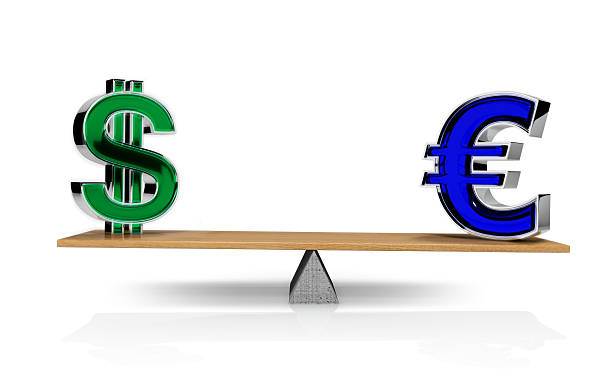
Forex transactions are fundamentally different. You are trading one national economy against another. The value of the euro relative to the US dollar reflects interest rate differentials, trade balances, inflation expectations, and central bank policy. These are macro forces that move slowly and predictably compared to a single stock’s earnings miss or a crypto exchange collapse. Currencies do not go to zero. A country can devalue its currency sharply, but it cannot simply vanish. This structural lower bound gives Forex traders a risk management advantage that stock and crypto traders often lack.
Liquidity is another critical distinction that directly impacts your ability to execute trades without slippage. The Forex market moves over six trillion dollars daily. Major currency pairs like EUR/USD or USD/JPY have spreads as tight as one-tenth of a pip during peak hours. This means you can enter and exit positions almost instantly at the price you see on your screen. Compare this to stocks: even large-cap equities can gap against you during earnings announcements or when market makers widen spreads during volatility. Crypto exchanges are notorious for liquidity fragmentation, where a single large order on Binance can move the entire market, and during crashes, order books thin out entirely, leaving retail traders unable to exit at any reasonable price.
Another compelling reason retail traders gravitate toward Forex is the leverage structure. Forex brokers in regulated jurisdictions offer leverage up to 30:1 for major pairs, sometimes higher offshore. This may sound dangerous, but the key point is that currency volatility is low. A 1 percent daily move in EUR/USD is a large day. In crypto, a 10 percent daily move is normal. When you apply leverage to low-volatility assets, you can achieve meaningful returns while maintaining tight stop losses that are less likely to be triggered by random noise. In stocks, volatility is higher, and gap risk is real. In crypto, leverage is essentially a death sentence for most retail traders because a single adverse swing can liquidate the entire account before you can blink.
The cost structure also favors Forex for active traders. There are no commissions on most retail Forex trades. The broker makes money from the spread. In stocks, you pay commissions or subscription fees, and for short selling, you pay borrow fees and interest. Crypto trading incurs maker-taker fees, withdrawal fees, and network gas fees that can eat into small account balances. Over a year of frequent trading, these costs compound significantly. In Forex, your primary cost is the spread, and for major pairs it is often less than one pip. This allows you to scalp, day trade, or swing trade without feeling like the market is taking a cut of every move.
Time availability also matters. The Forex market operates 24 hours a day from Sunday evening to Friday afternoon in the New York close. This is not just about convenience. It means you can trade during Asian, European, or American sessions depending on your schedule and the pairs you favor. Stocks are tied to exchange hours and after-hours liquidity is poor. Crypto never closes, which sounds liberating, but 24/7 trading means you are never safe from weekend collapses or sudden protocol failures. Forex gives you a predictable rhythm: news events at scheduled times, central bank decisions on fixed calendars, and clear session boundaries for technical analysis.
Finally, the learning curve for Forex is more linear for the retail trader. Stock trading requires understanding individual company financials, sector rotations, and earnings calls. Crypto requires following developer updates, governance proposals, and on-chain metrics that change constantly. Forex is driven by macroeconomics, which is systematic and data-driven. If you can follow interest rate decisions, understand purchasing power parity, and read a candlestick chart, you have the core toolkit. The fundamentals do not change overnight. Correlation between currency pairs is stable. Spread behavior is predictable. This makes backtesting and risk modeling actually useful.
For the casual or moderately active investor looking to trade safely, Forex offers a cleaner path. You are trading nations, not companies or tokens. You have deep liquidity, low costs, accessible leverage on stable volatility, and 24-hour windows that fit real lives. Crypto and stocks have their places, but for those focused on consistent, risk-managed currency speculation, Forex remains the superior arena. The question is not whether you can make money in all three. The question is which market gives you the best chance to make money while preserving your capital. That answer is clear.