

- USD-JPY 158.45 (+0.22 )
- GBP-USD 1.2985 (+0.0008 )
- USD-CHF 0.8842 (-0.0005 )
- AUD-USD 0.6754 (-0.0021 )
- USD-CAD 1.3688 (+0.0015 )
- NZD-USD 0.6123 (-0.0018 )
- EUR-JPY 173.05 (+0.1 )
- GBP-JPY 205.74 (+0.35 )
- EUR-GBP 0.8410 (-0.0019 )
- AUD-JPY 107.03 (-0.15 )
- EUR-CHF 0.9656 (-0.0008 )
- USD-CNY 7.2514 (+0.0002 )
- USD-HKD 7.8055 (+0.0001 )
- USD-SGD 1.3442 (+0.0004 )
- USD-SEK 10.5521 (+0.021 )
- USD-NOK 10.7435 (+0.0315 )
- USD-DKK 6.9452 (+0.004 )
- GBP-CHF 1.1481 (+0.0003 )
- AUD-CAD 0.9244 (-0.0022 )
- CAD-JPY 115.76 (+0.08 )
- NZD-JPY 97.02 (-0.05 )
- CHF-JPY 179.20 (+0.25 )
- EUR-CAD 1.4948 (+0.0005 )
- GBP-CAD 1.7773 (+0.0025 )
- AUD-CHF 0.5972 (-0.002 )
- NZD-CHF 0.5414 (-0.0016 )
- CAD-CHF 0.6460 (-0.0004 )
- EUR-AUD 1.6170 (+0.0015 )
- GBP-AUD 1.9225 (+0.0045 )
- EUR-NZD 1.7836 (+0.002 )
- GBP-NZD 2.1206 (+0.005 )
- AUD-NZD 1.1030 (-0.0005 )
- USD-MXN 17.6520 (+0.051 )
- USD-ZAR 18.2540 (-0.082 )
- USD-TRY 33.1550 (+0.024 )
- USD-INR 83.6210 (+0.011 )
- USD-BRL 5.4820 (-0.031 )
- USD-KRW 1378.45 (+2.15 )
- USD-PLN 3.9650 (-0.005 )
- USD-HUF 362.45 (+0.85 )
- USD-CZK 23.1250 (+0.035 )
- USD-ILS 3.6840 (-0.008 )
- USD-CLP 945.20 (+2.1 )
- USD-PHP 58.75 (+0.12 )
- USD-THB 36.15 (+0.05 )
- USD-IDR 16180.00 (+25 )
- USD-MYR 4.6850 (-0.002 )
- USD-VND 25450.00 (+5 )
- USD-RUB 88.50 (+0.25 )
- EUR-MXN 19.1365 (+0.025 )
- EUR-ZAR 19.7750 (-0.11 )
- EUR-TRY 35.9150 (+0.045 )
- EUR-PLN 4.2980 (-0.006 )
- EUR-HUF 392.85 (+0.65 )
- EUR-CZK 25.0560 (+0.015 )
- GBP-MXN 22.7750 (+0.065 )
- GBP-ZAR 23.5420 (-0.12 )
- GBP-TRY 42.7560 (+0.085 )
- GBP-PLN 5.1180 (-0.002 )
- AUD-CNY 4.9015 (-0.012 )
- AUD-HKD 5.2725 (-0.015 )
- AUD-SGD 0.9078 (-0.0025 )
- CAD-CNY 5.2975 (+0.008 )
- CAD-HKD 5.6980 (+0.005 )
- CAD-SGD 0.9815 (+0.0012 )
- NZD-CNY 4.4395 (-0.011 )
- NZD-HKD 4.7750 (-0.014 )
- NZD-SGD 0.8226 (-0.0022 )
- CHF-CNY 8.1990 (-0.004 )
- CHF-HKD 8.8185 (-0.0035 )
- CHF-SGD 1.5185 (-0.0005 )
- JPY-CNY 0.0458 (-0.0001 )
- JPY-HKD 0.0493 (-0.0001 )
- JPY-SGD 0.0085 (-0.0001 )
- EUR-SGD 1.4682 (-0.001 )
- GBP-SGD 1.7458 (+0.0015 )
- EUR-HKD 8.5285 (-0.009 )
- GBP-HKD 10.1385 (+0.0055 )
- EUR-CNY 7.9195 (-0.008 )
- GBP-CNY 9.4185 (+0.005 )
- USD-SAR 3.7505 (+0 )
- USD-AED 3.6730 (+0 )
- USD-QAR 3.6410 (+0.0001 )
- USD-KWD 0.3065 (+0.0001 )
- EUR-SAR 4.0955 (-0.0045 )
- EUR-AED 4.0115 (-0.0044 )
- GBP-SAR 4.8705 (+0.003 )
- GBP-AED 4.7715 (+0.003 )
- AUD-SAR 2.5325 (-0.008 )
- AUD-AED 2.4810 (-0.0078 )
- CAD-SAR 5.1295 (+0.0055 )
- CAD-AED 5.0255 (+0.0055 )
- NZD-SAR 2.2965 (-0.0068 )
- NZD-AED 2.2495 (-0.0066 )
- CHF-SAR 3.3155 (-0.0018 )
- CHF-AED 3.2475 (-0.0018 )
- JPY-SAR 0.0237 (+0.0001 )
- JPY-AED 0.0232 (+0.0001 )
- EUR-DKK 7.4585 (-0.0005 )
Foreign reserves management stabilizes value
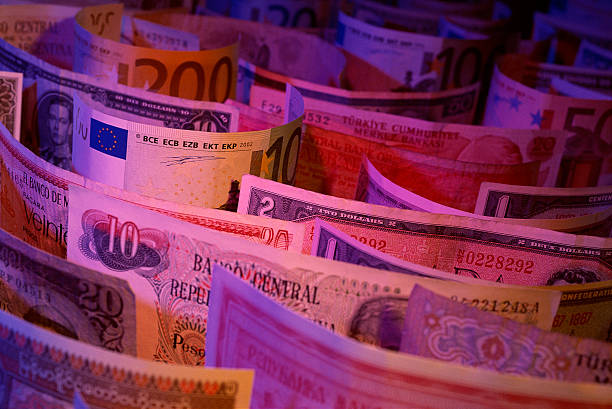
Foreign exchange reserves are not idle stockpiles of cash sitting in central bank vaults. They are active, strategic tools used to stabilize currency value, and understanding how they work is essential for any forex trader who wants to move beyond surface-level chart reading. Central banks manage reserves to prevent excessive volatility, maintain purchasing power, and instill confidence in their currency. But how does this management actually intersect with the mechanics of forex trading? The answer lies in the daily operations of the interbank market, where reserves are deployed to influence supply and demand dynamics in real time.
When a central bank decides to stabilize its currency, it typically intervenes by buying or selling its own reserves. If the currency is depreciating too rapidly, the central bank sells foreign reserves, usually US dollars, euros, or yen, and buys its own currency. This increased demand for the domestic currency pushes its value higher. Conversely, if the currency is appreciating too quickly and hurting export competitiveness, the central bank sells its own currency and accumulates foreign reserves. This is not theoretical. It happens every day in markets like Japan, Switzerland, and emerging economies where reserve balances are large enough to move prices.
For the forex trader, this means that reserve levels are a leading indicator of potential intervention. When a country’s reserves are high and rising, the central bank has more ammunition to defend its currency. When reserves are falling, the central bank may be fighting a losing battle against market forces. Tracking reserve data, which is often published monthly or quarterly, gives you a window into the central bank’s capacity and willingness to act. A sharp drop in reserves without a corresponding increase in imports or debt payments often signals that the central bank has been selling dollars to prop up its currency. That is a red flag for traders who rely on trend continuation, because intervention can break a trend abruptly.
The mechanics of how this works in the forex market are straightforward but often misunderstood. Central banks do not trade like retail speculators. They do not place limit orders on MetaTrader. Instead, they operate through commercial banks that act as agents. A central bank might instruct a major dealer bank to execute a large buy order for its domestic currency at a specific price level. Because these orders are massive, they can absorb selling pressure and create a floor under the currency. Retail traders who see this activity on their charts might interpret it as a sudden wave of bullish sentiment, but it is actually a calculated policy move.
The effect on forex trading strategies is profound. Traders who rely on technical analysis must account for the fact that central bank intervention can invalidate support and resistance levels. A currency that appears to be breaking down through a key level may suddenly reverse if the central bank steps in. This is why experienced traders watch central bank speeches, reserve data releases, and economic indicators like inflation and trade balances. When a central bank signals that it considers the currency overvalued or undervalued, it is giving the market a clear warning. Ignoring that warning can lead to significant losses.
Foreign reserves management also stabilizes value indirectly by providing liquidity during crises. In times of global financial stress, investors flee to safe-haven currencies like the US dollar. This causes other currencies to plummet. Central banks with large reserves can sell dollars to provide liquidity to their domestic banking systems and prevent a full-blown currency crisis. For the forex trader, this means that major economic shocks often produce buying opportunities in currencies backed by strong reserve positions. The Swiss National Bank, for example, has historically used its massive reserves to prevent the franc from appreciating too quickly, creating predictable trading ranges that savvy traders exploit.
On ForexTrades.net, we emphasize that casual and moderately active investors must understand these dynamics to trade safely. You cannot treat forex as a pure technical game. The fundamentals of reserve management are the bedrock upon which currency values rest. When you see a central bank actively managing its reserves, you are seeing the highest level of capital allocation in the financial system. Your trades exist within that framework. By studying how foreign reserves are deployed, you gain a deeper understanding of why currencies move the way they do and how to position yourself for success.
In summary, foreign reserves management is not an abstract concept reserved for economists. It is a daily reality in the forex market that creates opportunities and risks for traders. Central banks use reserves to stabilize value, influence exchange rates, and maintain credibility. As a trader, your job is to read the signals, anticipate intervention, and align your strategy accordingly. The market is not random. It is managed. And the managers hold reserves.


Currency Quotes
EUR-USD


Current
1.0921Change
-0.0012
USD-JPY

Current
158.45Change
+0.22
GBP-USD

Current
1.2985Change
+0.0008
USD-CHF

Current
0.8842Change
-0.0005
AUD-USD

Current
0.6754Change
-0.0021
USD-CAD

Current
1.3688Change
+0.0015
NZD-USD

Current
0.6123Change
-0.0018
EUR-JPY
Current
173.05Change
+0.1
GBP-JPY
Current
205.74Change
+0.35
EUR-GBP
Current
0.8410Change
-0.0019
AUD-JPY
Current
107.03Change
-0.15
EUR-CHF
Current
0.9656Change
-0.0008
USD-CNY

Current
7.2514Change
+0.0002
USD-HKD

Current
7.8055Change
+0.0001
USD-SGD

Current
1.3442Change
+0.0004
USD-SEK

Current
10.5521Change
+0.021
USD-NOK

Current
10.7435Change
+0.0315
USD-DKK

Current
6.9452Change
+0.004
GBP-CHF
Current
1.1481Change
+0.0003
AUD-CAD
Current
0.9244Change
-0.0022
CAD-JPY
Current
115.76Change
+0.08
NZD-JPY
Current
97.02Change
-0.05
CHF-JPY
Current
179.20Change
+0.25
EUR-CAD
Current
1.4948Change
+0.0005
GBP-CAD
Current
1.7773Change
+0.0025
AUD-CHF
Current
0.5972Change
-0.002
NZD-CHF
Current
0.5414Change
-0.0016
CAD-CHF
Current
0.6460Change
-0.0004
EUR-AUD
Current
1.6170Change
+0.0015
GBP-AUD
Current
1.9225Change
+0.0045
EUR-NZD
Current
1.7836Change
+0.002
GBP-NZD
Current
2.1206Change
+0.005
AUD-NZD
Current
1.1030Change
-0.0005
USD-MXN

Current
17.6520Change
+0.051
USD-ZAR

Current
18.2540Change
-0.082
USD-TRY

Current
33.1550Change
+0.024
USD-INR

Current
83.6210Change
+0.011
USD-BRL

Current
5.4820Change
-0.031
USD-KRW

Current
1378.45Change
+2.15
USD-PLN

Current
3.9650Change
-0.005
USD-HUF

Current
362.45Change
+0.85
USD-CZK

Current
23.1250Change
+0.035
USD-ILS

Current
3.6840Change
-0.008
USD-CLP

Current
945.20Change
+2.1
USD-PHP

Current
58.75Change
+0.12
USD-THB

Current
36.15Change
+0.05
USD-IDR

Current
16180.00Change
+25
USD-MYR

Current
4.6850Change
-0.002
USD-VND

Current
25450.00Change
+5
USD-RUB

Current
88.50Change
+0.25
EUR-MXN
Current
19.1365Change
+0.025