
FX swap exchanges principal and interest
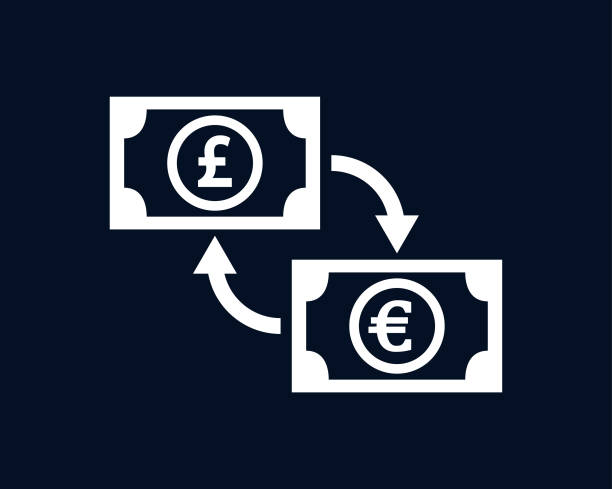
In the foreign exchange market, the FX swap is one of the most misunderstood yet essential transaction types for traders who hold positions beyond the daily settlement cutoff. Unlike a spot or forward trade, an FX swap simultaneously involves two legs: a near-date transaction and a far-date transaction, both executed at different exchange rates. The core of this mechanism revolves around the exchange of principal and the embedded interest differential, which together determine the cost or credit a trader receives for holding a position overnight. Understanding this structure is critical for anyone moving from casual speculation to active, systematic trading.
An FX swap is not a single trade but a paired contract. In its most common form, a trader buys a currency pair in the spot market and simultaneously sells it forward, or vice versa. The near leg settles the principal exchange at the current spot rate, while the far leg reverses that exchange at a forward rate that reflects the interest rate gap between the two currencies. This is where the principal exchange becomes tangible: the entire notional amount of the base currency and the quote currency physically move between counterparties on the settlement dates. For example, if you are long EUR/USD and you roll the position forward, your counterparty delivers euros to you on the spot date, and you deliver dollars. On the forward date, you return the euros and receive the dollars back. The principal amounts are identical in size, but the exchange rates differ, creating a net gain or loss.
The interest component emerges from that rate differential. The forward rate in an FX swap is not a speculative guess but a mathematical derivation of the two currencies’ interest rates. If the eurozone pays a higher interest rate than the United States, the forward rate for EUR/USD will be lower than the spot rate. This discount is the swap points, and it represents the interest that the long euro position must forgo or pay to the short dollar side. Conversely, if the euro has a lower interest rate, the forward rate is higher, and the long euro position receives credit. This is not a separate interest payment; it is embedded in the exchange rate of the far leg. The principal amount remains constant, but its relative value shifts based on the cost of carry.
For traders, the practical implication is that every overnight position undergoes an implicit swap. When you hold a currency pair past 5:00 PM New York time, your broker automatically rolls the position into the next settlement date by executing a synthetic FX swap. The near leg closes your current position at the prevailing spot rate, and the far leg opens a new position at the forward rate adjusted by the swap points. The difference is credited or debited to your account as swap interest. This is not a fee charged by the broker; it is a direct reflection of the interbank swap market. If you are long a high-interest currency against a low-interest currency, you earn positive carry. If the reverse is true, you pay.
The principal exchange in these rollovers is invisible to retail traders because brokers net out the cash flows internally. But for institutional participants or any trader analyzing their true exposure, the principal is real. A $1 million notional position in USD/JPY means that on the spot date, the trader is effectively lending $1 million and receiving the equivalent yen. The next day, that loan is extinguished and a new one is created at a different exchange rate. Over multiple rollovers, the cumulative effect of these principal exchanges can significantly impact overall returns, especially in volatile interest rate environments.
Advanced traders use this mechanism strategically. Instead of viewing swap points as a nuisance, they assess the forward curve for arbitrage opportunities. For instance, if the swap points are mispriced relative to the actual interest rate differential, a trader can execute a covered interest rate arbitrage by simultaneously entering an FX swap and a deposit or loan in the underlying currencies. This locks in a risk-free return. More commonly, traders choose pairs based on whether they want positive or negative carry, aligning their rollover strategy with their directional thesis. A long-term trend follower in AUD/JPY, for example, might deliberately seek a pair with high positive carry to offset any drawdowns from adverse price movement.
The mechanics also govern how swap rates are quoted. Brokers display swap rates in pips per lot per day, but these numbers derive from the overnight swap points in the interbank market, which are themselves calculated from the principal notional and the interest rate spread. A shift in central bank policy alters the swap points instantly, changing the cost of holding a position. During periods of rate divergence, such as the Federal Reserve hiking while the European Central Bank holds steady, the swap on EUR/USD can become deeply negative for euro longs, destroying unhedged positions over time.
In summary, an FX swap is not merely a tool for extending a trade’s life. It is a precise instrument for exchanging principal and interest across two distinct settlement dates. The principal amount remains constant, ensuring that the trader’s core market exposure is unchanged, while the interest differential is realized through the forward rate adjustment. For the active trader on ForexTrades.net, mastering this distinction transforms rollover from a passive event into an active risk and return management decision. Do not treat swap costs as random deductions. Calculate them, anticipate them, and use them to tilt the probabilities in your favor.