
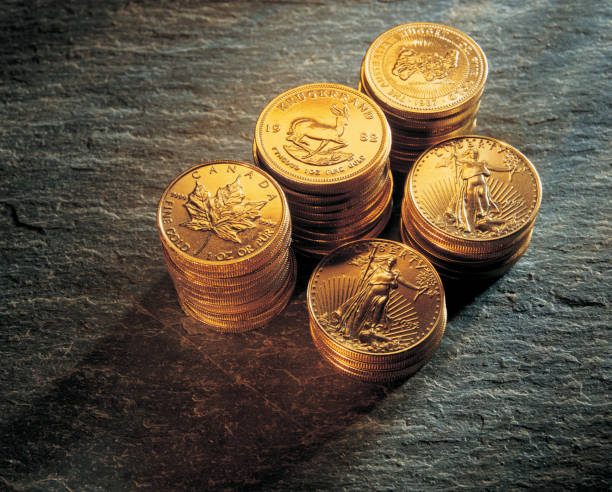
Gold serves as alternative safe haven
In the foreign exchange market, the concept of a safe haven is not static. While the US dollar, Japanese yen, and Swiss franc have historically dominated this category, the dynamics of global capital flows have increasingly positioned gold as a distinct and powerful alternative. For traders on ForexTrades.net who want to move beyond beginner-level understanding, recognizing how gold behaves as a safe haven requires a grasp of the specific factors that influence exchange rates—and how gold disrupts those traditional correlations.
The primary driver of gold’s safe haven status is its role as a non-sovereign, non-yielding asset. Unlike fiat currencies, gold carries no central bank policy, no interest rate differential, and no credit risk tied to a single government. This fundamental characteristic becomes critical when exchange rates are under pressure from geopolitical instability, sovereign debt crises, or systemic banking stress. During these periods, investors flee currencies that are exposed to political or economic fragility, and gold absorbs that flight capital. The mechanism is straightforward: when confidence in fiat systems erodes, gold’s scarcity and historical store of value become a liquid alternative.
One of the most significant factors influencing exchange rates that directly impacts gold’s safe haven role is real interest rates. Real interest rates are nominal rates minus inflation expectations. When central banks, particularly the Federal Reserve, raise nominal rates but inflation remains stubbornly high, real rates can stay low or negative. In such an environment, holding cash or short-term bonds yields a negative return after inflation. Gold, which pays no interest, becomes relatively more attractive because its opportunity cost declines. Conversely, when real rates rise sharply, gold tends to weaken against the dollar, as yield-bearing assets become more appealing. This inverse correlation between real yields and gold is one of the most reliable signals for traders monitoring risk-on versus risk-off sentiment.
Another critical factor is the US Dollar Index. Gold is priced in dollars, so a weakening dollar tends to push gold prices higher, all else being equal. However, gold’s safe haven status often confounds this simple relationship during periods of acute stress. In a true crisis, both the dollar and gold may rise simultaneously, as each attracts capital for different reasons. The dollar benefits from its liquidity and depth of US Treasury markets, while gold benefits from its independence from any single government. For the serious trader, monitoring the correlation between gold and the dollar during crisis phases reveals whether the market perceives the stress as systemic or localized. If both rise, the market is pricing in global risk aversion; if gold rises while the dollar falls, it signals a shift away from US-centric safe havens, often due to US fiscal concerns or Fed policy missteps.
Inflation expectations also play a pivotal role. Gold is often called an inflation hedge, but its behavior is more nuanced in the forex context. When inflation expectations rise due to supply shocks or currency debasement, gold strengthens because it represents a fixed real asset. This dynamic directly impacts exchange rates by reducing the purchasing power of fiat currencies, especially those of commodity-importing nations. For instance, when gold surges due to inflation fears, currencies like the Australian or Canadian dollar may initially benefit due to their commodity exposure, but over time, higher gold can signal underlying weakness in the major reserve currencies. A trader who understands this can anticipate shifts in carry trade sentiment and capital flows.
Gold also serves as a barometer for geopolitical risk. In times of war, sanctions, or trade disruptions, gold prices spike as investors seek assets outside the reach of any single government’s legal or monetary authority. This reaction is distinct from currency safe havens like the Swiss franc, which can be influenced by SNB intervention or negative rate policies. Gold’s neutrality makes it the ultimate hedge against political risk, and its price action often precedes major moves in risk-sensitive currency pairs like EUR/USD or USD/JPY.
Finally, central bank gold reserves are an often-overlooked factor influencing exchange rates. When central banks in emerging markets or even developed economies increase their gold holdings, it signals a diversification away from dollar-denominated assets. This reduces demand for US Treasuries and can exert downward pressure on the dollar over the medium term. For the retail trader, tracking central bank gold purchases—especially from China, Russia, and India—provides a macro-level clue about shifting reserve currency dynamics and potential long-term trends in USD pairs.
In conclusion, gold is not merely a commodity to be traded alongside currencies; it is a separate asset class that reveals the health and confidence of the global fiat system. By understanding how real interest rates, dollar strength, inflation expectations, geopolitical risk, and central bank behavior influence both gold and exchange rates, a trader can better time entries into safe haven or risk-on environments. For those on ForexTrades.net, mastering gold’s role as an alternative safe haven means moving beyond simple correlations and instead reading gold as a signal of structural stress or stability in the currency markets.