
How currency symbols are standardized globally
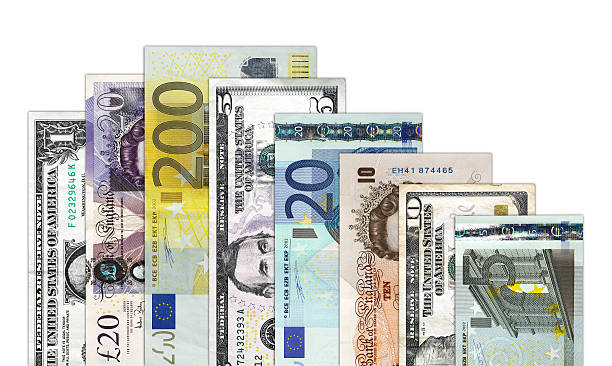
Before you can confidently buy and sell currency pairs, you must understand the language the market speaks. That language begins with the three-letter currency codes you see on every trading platform: USD, EUR, JPY, GBP. These symbols are not random abbreviations. They are the product of a rigorous international standardization process governed by the International Organization for Standardization under a system known as ISO 4217. Without this standardization, the global foreign exchange market, which moves over seven trillion dollars daily, would collapse into chaos. For traders aiming to make money from currencies safely, grasping how these codes work provides a critical foundation for understanding base and quote currencies.
The ISO 4217 standard was first published in 1978 to eliminate the confusion that plagued international trade before that time. Prior to this system, currencies were identified by inconsistent names and symbols, often leading to costly errors. For example, the French franc might be written as FF, FRF, or simply F depending on the bank or broker. Such ambiguity is lethal in a market where milliseconds matter. The ISO standard solved this problem by assigning each currency a unique three-letter code. The first two letters represent the country or economic region, drawn from the ISO 3166 country code standard. The third letter typically represents the currency name itself. Thus, the United States dollar becomes USD, where US identifies the country and D stands for dollar. The Japanese yen becomes JPY, with JP for Japan and Y for yen. The euro, which belongs to a multi-country economic bloc, uses EUR, where EU identifies the European Union and R represents the euro.
This system extends beyond major currencies. It covers every recognized currency in the world, from the Kuwaiti dinar (KWD) to the Iraqi dinar (IQD) and even digital currencies and precious metals like gold (XAU) and silver (XAG). The letter X in these codes designates supranational entities or non-country-specific assets, ensuring that gold and silver trade with the same clarity as national currencies. For the forex trader, this means that every pair you see on your platform carries an unambiguous identity. When you trade EUR/USD, you know with absolute certainty that you are betting on the value of one euro in terms of U.S. dollars, nothing more and nothing less.
Understanding this standardization is essential because it directly dictates how you read currency pairs. In forex trading, every trade is a pair. The first currency listed is the base currency, and the second is the quote currency. The base currency always represents one unit. The quote currency tells you how much of that second currency is needed to buy one unit of the base. So in the pair GBP/USD, the British pound is the base, and the dollar is the quote. A price of 1.2500 means one British pound costs one dollar and twenty-five cents. This order is non-negotiable and universally respected across every broker and platform in the world, precisely because ISO 4217 standardized the symbols that define the pair.
The standardization also enables traders to compare prices across different brokers, calculate spreads, and manage risk with precision. If every broker used a different code for the same currency, you could never be sure you were comparing the same instrument. The ISO system ensures that a trade in USD/JPY on one platform is identical to a trade in USD/JPY on another. For the advanced trader, this uniformity allows for algorithmic trading systems that can operate across multiple liquidity providers without manual intervention or interpretation. It also simplifies the process of hedging, where a trader might simultaneously hold positions in correlated pairs like EUR/USD and GBP/USD, knowing that the base and quote relationship remains consistent.
Moreover, the ISO 4217 standard is not static. It is updated regularly to accommodate new currencies, revaluations, and economic changes. When a country redenominates its currency, as Venezuela did with the bolivar or Zimbabwe did with its dollar, the ISO issues new codes to prevent confusion with the old, devalued units. This dynamic aspect is crucial for traders who follow emerging markets or geopolitical events. A sudden change in a currency code can signal a fundamental shift in economic structure, and the alert trader pays attention to these updates as much as to interest rate decisions.
For the casual and moderately active investor visiting ForexTrades.net, the takeaway is straightforward. The three-letter currency symbols you see are not arbitrary. They are a global standard that makes the forex market functional, liquid, and transparent. When you learn to read base and quote currencies, you are building on a foundation that was laid decades ago by international agreement. Respect that foundation, and you will navigate the markets with clarity. Ignore it, and you risk confusion at best and financial loss at worst. Standardization is not glamorous, but in forex trading, it is the bedrock upon which all profit and loss ultimately rest.