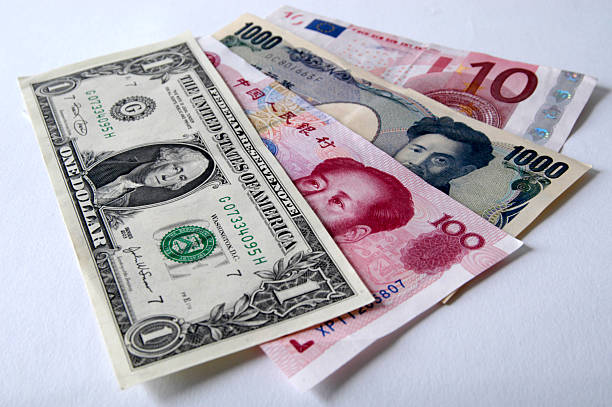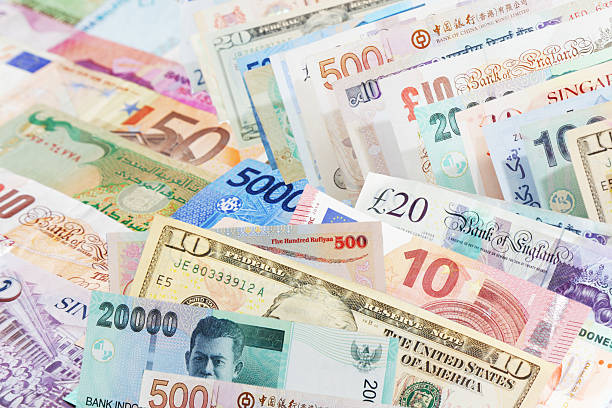

Major central banks: Fed, ECB, BOJ, BOE
Understanding how forex trading works requires more than chart patterns and leverage ratios. At its core, the foreign exchange market is a direct reflection of the monetary policies and credibility of the world’s most powerful central banks. For any trader looking to move beyond casual speculation, grasping the distinct roles of the Federal Reserve, the European Central Bank, the Bank of Japan, and the Bank of England is not optional—it is foundational to reading currency valuation correctly.
The forex market operates as a continuous auction where one currency is exchanged for another based on relative value. But that value is not arbitrary. It is constantly being recalibrated by interest rate differentials, inflation expectations, and market confidence in each central bank’s ability to manage its economy. When you trade a pair like EUR/USD or GBP/JPY, you are effectively betting on which central bank will maintain tighter monetary policy or more credible forward guidance over a given time horizon.
The Federal Reserve is the most influential actor in global forex trading because the US dollar sits on one side of approximately 88% of all currency transactions. When the Fed signals a hawkish stance through rate hikes or quantitative tightening, the dollar typically strengthens as capital flows into dollar-denominated assets seeking higher yields. Conversely, when the Fed pivots to dovish language or cuts rates, the dollar weakens. Traders watch the Fed’s dot plot, minutes from the Federal Open Market Committee meetings, and speeches from Chair Jerome Powell with the same intensity that a sailor watches barometric pressure. The key here is not just the rate decision itself but the trajectory implied by the central bank’s language. A single sentence change in the post-meeting statement can move the dollar by a hundred pips within minutes.
The European Central Bank operates in a different structural reality. Unlike the Fed, which answers to a single sovereign, the ECB must balance the economic needs of nineteen diverse eurozone member states. This makes its policy signals inherently more cautious and sometimes slower to adjust. For forex traders, the ECB’s hesitancy often creates asymmetric trading opportunities. When the ECB does act decisively—such as during the 2022-2023 rate hiking cycle—the euro can stage sharp, sustained rallies because the market has already priced in a lag. But traders must also account for political risk. The ECB’s Transmission Protection Instrument, for example, was designed to prevent bond market fragmentation, but its very existence signals underlying fragility that can cap euro strength over the long term. Understanding this dynamic allows traders to anticipate when euro rallies are likely to stall.
The Bank of Japan is the outlier that every forex trader must understand, especially if they trade the yen. For decades, the BOJ has maintained a policy of ultra-low or negative interest rates while engaging in massive quantitative easing, including yield curve control. This persistent divergence from the Fed and ECB has made USD/JPY and EUR/JPY some of the most trend-driven pairs in existence. When the BOJ tweaks its yield curve control band by even a single basis point, the yen can snap violently in the opposite direction of years-long trends. The BOJ’s actions are less about inflation targeting in the traditional sense and more about preventing deflation and managing government debt sustainability. Traders who ignore this structural reality often get caught on the wrong side of yen carry trades when volatility spikes. The BOJ’s occasional forex interventions—directly buying yen to prop up its value—are rare but devastating for unprepared short-term speculators.
The Bank of England reflects a hybrid of the Fed’s independence and the ECB’s exposure to external shocks. The BOE is typically more reactive to domestic inflation data, but sterling is also highly sensitive to Brexit-related trade frictions and energy price spikes due to the UK’s reliance on natural gas imports. When the BOE raises rates aggressively, as it did during 2022-2023, GBP can rally but often gives back gains quickly if the market perceives the economy is too fragile to sustain tight policy. The BOE’s forward guidance is usually more direct than the ECB’s but less hawkish than the Fed’s on average. This makes GBP pairs excellent vehicles for range-bound trading strategies, provided the trader monitors UK CPI releases and GDP revisions with precision.
In practice, forex trading based on central bank policy is about anticipating the next divergence. A trader does not need to predict whether the Fed will cut rates in three months. Rather, the trader needs to assess whether the market has fully priced in that expectation. If the market expects a 50 basis point cut but the Fed delivers only 25, the dollar will rally because reality fell short of exuberance. This is why the most successful forex traders spend less time on chart patterns and more time reading central bank statements, understanding the political constraints each governor faces, and tracking the real-time repricing of interest rate probabilities via swap markets.
Ignoring the central bank context means trading blind. The Fed, ECB, BOJ, and BOE are not background noise—they are the primary drivers of every major currency move. Mastering how their policies translate into valuation shifts is what separates informed traders from gamblers. On ForexTrades.net, we equip you with the framework to read these signals and act on them with discipline. The market moves on credibility, and central banks are the source of that credibility or the lack of it.