
- USD-JPY 158.45 (+0.22 )
- GBP-USD 1.2985 (+0.0008 )
- USD-CHF 0.8842 (-0.0005 )
- AUD-USD 0.6754 (-0.0021 )
- USD-CAD 1.3688 (+0.0015 )
- NZD-USD 0.6123 (-0.0018 )
- EUR-JPY 173.05 (+0.1 )
- GBP-JPY 205.74 (+0.35 )
- EUR-GBP 0.8410 (-0.0019 )
- AUD-JPY 107.03 (-0.15 )
- EUR-CHF 0.9656 (-0.0008 )
- USD-CNY 7.2514 (+0.0002 )
- USD-HKD 7.8055 (+0.0001 )
- USD-SGD 1.3442 (+0.0004 )
- USD-SEK 10.5521 (+0.021 )
- USD-NOK 10.7435 (+0.0315 )
- USD-DKK 6.9452 (+0.004 )
- GBP-CHF 1.1481 (+0.0003 )
- AUD-CAD 0.9244 (-0.0022 )
- CAD-JPY 115.76 (+0.08 )
- NZD-JPY 97.02 (-0.05 )
- CHF-JPY 179.20 (+0.25 )
- EUR-CAD 1.4948 (+0.0005 )
- GBP-CAD 1.7773 (+0.0025 )
- AUD-CHF 0.5972 (-0.002 )
- NZD-CHF 0.5414 (-0.0016 )
- CAD-CHF 0.6460 (-0.0004 )
- EUR-AUD 1.6170 (+0.0015 )
- GBP-AUD 1.9225 (+0.0045 )
- EUR-NZD 1.7836 (+0.002 )
- GBP-NZD 2.1206 (+0.005 )
- AUD-NZD 1.1030 (-0.0005 )
- USD-MXN 17.6520 (+0.051 )
- USD-ZAR 18.2540 (-0.082 )
- USD-TRY 33.1550 (+0.024 )
- USD-INR 83.6210 (+0.011 )
- USD-BRL 5.4820 (-0.031 )
- USD-KRW 1378.45 (+2.15 )
- USD-PLN 3.9650 (-0.005 )
- USD-HUF 362.45 (+0.85 )
- USD-CZK 23.1250 (+0.035 )
- USD-ILS 3.6840 (-0.008 )
- USD-CLP 945.20 (+2.1 )
- USD-PHP 58.75 (+0.12 )
- USD-THB 36.15 (+0.05 )
- USD-IDR 16180.00 (+25 )
- USD-MYR 4.6850 (-0.002 )
- USD-VND 25450.00 (+5 )
- USD-RUB 88.50 (+0.25 )
- EUR-MXN 19.1365 (+0.025 )
- EUR-ZAR 19.7750 (-0.11 )
- EUR-TRY 35.9150 (+0.045 )
- EUR-PLN 4.2980 (-0.006 )
- EUR-HUF 392.85 (+0.65 )
- EUR-CZK 25.0560 (+0.015 )
- GBP-MXN 22.7750 (+0.065 )
- GBP-ZAR 23.5420 (-0.12 )
- GBP-TRY 42.7560 (+0.085 )
- GBP-PLN 5.1180 (-0.002 )
- AUD-CNY 4.9015 (-0.012 )
- AUD-HKD 5.2725 (-0.015 )
- AUD-SGD 0.9078 (-0.0025 )
- CAD-CNY 5.2975 (+0.008 )
- CAD-HKD 5.6980 (+0.005 )
- CAD-SGD 0.9815 (+0.0012 )
- NZD-CNY 4.4395 (-0.011 )
- NZD-HKD 4.7750 (-0.014 )
- NZD-SGD 0.8226 (-0.0022 )
- CHF-CNY 8.1990 (-0.004 )
- CHF-HKD 8.8185 (-0.0035 )
- CHF-SGD 1.5185 (-0.0005 )
- JPY-CNY 0.0458 (-0.0001 )
- JPY-HKD 0.0493 (-0.0001 )
- JPY-SGD 0.0085 (-0.0001 )
- EUR-SGD 1.4682 (-0.001 )
- GBP-SGD 1.7458 (+0.0015 )
- EUR-HKD 8.5285 (-0.009 )
- GBP-HKD 10.1385 (+0.0055 )
- EUR-CNY 7.9195 (-0.008 )
- GBP-CNY 9.4185 (+0.005 )
- USD-SAR 3.7505 (+0 )
- USD-AED 3.6730 (+0 )
- USD-QAR 3.6410 (+0.0001 )
- USD-KWD 0.3065 (+0.0001 )
- EUR-SAR 4.0955 (-0.0045 )
- EUR-AED 4.0115 (-0.0044 )
- GBP-SAR 4.8705 (+0.003 )
- GBP-AED 4.7715 (+0.003 )
- AUD-SAR 2.5325 (-0.008 )
- AUD-AED 2.4810 (-0.0078 )
- CAD-SAR 5.1295 (+0.0055 )
- CAD-AED 5.0255 (+0.0055 )
- NZD-SAR 2.2965 (-0.0068 )
- NZD-AED 2.2495 (-0.0066 )
- CHF-SAR 3.3155 (-0.0018 )
- CHF-AED 3.2475 (-0.0018 )
- JPY-SAR 0.0237 (+0.0001 )
- JPY-AED 0.0232 (+0.0001 )
- EUR-DKK 7.4585 (-0.0005 )
Measure win rate and risk-reward ratio

Any trader who has spent more than a few months in the forex markets knows that raw profitability is an illusion without context. You can close a month with a positive number in your account and still be walking a path toward ruin if you do not understand why you won. The two metrics that strip away that illusion are win rate and risk-reward ratio. When backtesting a strategy, these numbers are not optional data points. They are the quantitative bedrock upon which every decision about position sizing, trade selection, and psychological resilience rests.
Win rate is the percentage of your trades that close in profit. A 60 percent win rate means six out of every ten trades end with a positive outcome. At first glance, a higher win rate seems always better, but this is where the trap lies. A strategy that wins 90 percent of the time can still lose money if the average loss is ten times larger than the average gain. The risk-reward ratio measures exactly that relationship. It is the amount you are willing to risk on a trade divided by the amount you expect to gain. A ratio of 1 to 3 means you risk one unit of capital to potentially gain three units. This ratio is not about prediction. It is about structure.
The interplay between these two metrics defines the mathematical expectancy of your strategy. Expectancy is the average amount you can expect to win or lose per trade over a large sample. It is calculated by multiplying the win rate by the average win amount, then subtracting the loss rate multiplied by the average loss amount. If that number is positive, your strategy has an edge. If it is negative, no amount of discipline or market intuition will save you over the long run. Backtesting without calculating expectancy is like flying an airplane without an altimeter. You might feel fine until you hit the ground.
Many retail traders make the mistake of chasing high win rates because they feel good emotionally. A string of winners reinforces confidence and dulls the pain of inevitable losses. But high win rate strategies often require tight stop losses and small profit targets, which means the risk-reward ratio is frequently below 1 to 1. In such a system, a single losing trade can erase the gains from several winning trades. Conversely, a strategy with a low win rate of 35 percent but a risk-reward ratio of 1 to 4 can be highly profitable. You lose seven out of twenty trades, but the three winning trades bring in enough capital to cover the losses and leave a net positive.
When backtesting, you must measure both metrics across different market regimes. A strategy that shows a 50 percent win rate and a 1 to 2 ratio during a trending market may collapse to a 30 percent win rate and a 1 to 1 ratio during a ranging market. This is why backtesting cannot be a one-time exercise. You must segment your data by volatility, trend strength, and session behavior. If your win rate drops below a critical threshold during certain conditions, you need to either filter those conditions out or adjust your risk-reward parameters. For example, widening your stop loss in low volatility environments might bring the win rate back up, but it will lower the risk-reward ratio. The trade-off must be calculated, not guessed.
Another critical point is the reliability of your sample size. A win rate of 70 percent over twenty trades is statistically meaningless. You need a minimum of one hundred trades, preferably several hundred, to have confidence that the numbers are not random noise. Even then, you must account for slippage and spread costs. If your strategy targets a risk-reward ratio of 1 to 2 but slippage eats 10 percent of your profit targets, the effective ratio becomes roughly 1 to 1.8. Over many trades, that erosion can turn a positive expectancy strategy into a losing one. Always backtest with realistic spreads and slippage assumptions that match the broker and session you intend to trade.
The true refinement of a strategy happens when you optimize the tension between win rate and risk-reward ratio. There is no perfect number. A day trader scalping five-minute charts may prefer a 70 percent win rate with a 1 to 1.5 ratio because the frequency of trades allows for rapid compounding. A swing trader holding positions for days may target a 40 percent win rate with a 1 to 4 ratio because the larger moves provide buffer room. Both are valid if the expectancy is positive. The mistake is to fixate on one metric while ignoring the other.
Finally, do not manipulate your backtest to produce attractive numbers. If you tighten your stop loss to achieve a higher win rate, you will get stopped out more often by normal market noise, and the risk-reward ratio will degrade. If you widen your take profit to achieve a better ratio, your win rate will drop because the price must travel further. These trade-offs are inherent. A refined strategy accepts the relationship between the two metrics and builds a trading plan around it. Measure them honestly, calculate expectancy, and then let the numbers dictate your adjustments rather than your emotions.
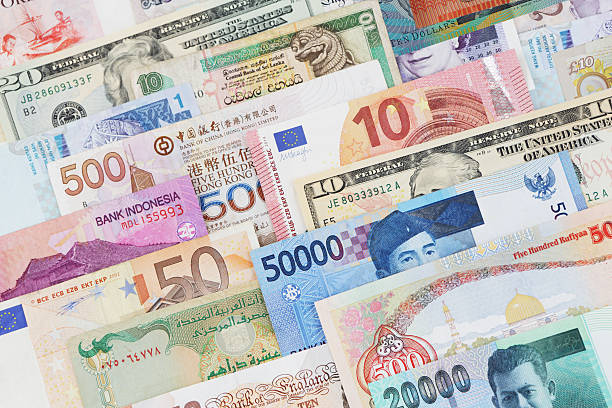

Currency Quotes
EUR-USD


Current
1.0921Change
-0.0012
USD-JPY

Current
158.45Change
+0.22
GBP-USD

Current
1.2985Change
+0.0008
USD-CHF

Current
0.8842Change
-0.0005
AUD-USD

Current
0.6754Change
-0.0021
USD-CAD

Current
1.3688Change
+0.0015
NZD-USD

Current
0.6123Change
-0.0018
EUR-JPY
Current
173.05Change
+0.1
GBP-JPY
Current
205.74Change
+0.35
EUR-GBP
Current
0.8410Change
-0.0019
AUD-JPY
Current
107.03Change
-0.15
EUR-CHF
Current
0.9656Change
-0.0008
USD-CNY

Current
7.2514Change
+0.0002
USD-HKD

Current
7.8055Change
+0.0001
USD-SGD

Current
1.3442Change
+0.0004
USD-SEK

Current
10.5521Change
+0.021
USD-NOK

Current
10.7435Change
+0.0315
USD-DKK

Current
6.9452Change
+0.004
GBP-CHF
Current
1.1481Change
+0.0003
AUD-CAD
Current
0.9244Change
-0.0022
CAD-JPY
Current
115.76Change
+0.08
NZD-JPY
Current
97.02Change
-0.05
CHF-JPY
Current
179.20Change
+0.25
EUR-CAD
Current
1.4948Change
+0.0005
GBP-CAD
Current
1.7773Change
+0.0025
AUD-CHF
Current
0.5972Change
-0.002
NZD-CHF
Current
0.5414Change
-0.0016
CAD-CHF
Current
0.6460Change
-0.0004
EUR-AUD
Current
1.6170Change
+0.0015
GBP-AUD
Current
1.9225Change
+0.0045
EUR-NZD
Current
1.7836Change
+0.002
GBP-NZD
Current
2.1206Change
+0.005
AUD-NZD
Current
1.1030Change
-0.0005
USD-MXN

Current
17.6520Change
+0.051
USD-ZAR

Current
18.2540Change
-0.082
USD-TRY

Current
33.1550Change
+0.024
USD-INR

Current
83.6210Change
+0.011
USD-BRL

Current
5.4820Change
-0.031
USD-KRW

Current
1378.45Change
+2.15
USD-PLN

Current
3.9650Change
-0.005
USD-HUF

Current
362.45Change
+0.85
USD-CZK

Current
23.1250Change
+0.035
USD-ILS

Current
3.6840Change
-0.008
USD-CLP

Current
945.20Change
+2.1
USD-PHP

Current
58.75Change
+0.12
USD-THB

Current
36.15Change
+0.05
USD-IDR

Current
16180.00Change
+25
USD-MYR

Current
4.6850Change
-0.002
USD-VND

Current
25450.00Change
+5
USD-RUB

Current
88.50Change
+0.25
EUR-MXN
Current
19.1365Change
+0.025