

- USD-JPY 158.45 (+0.22 )
- GBP-USD 1.2985 (+0.0008 )
- USD-CHF 0.8842 (-0.0005 )
- AUD-USD 0.6754 (-0.0021 )
- USD-CAD 1.3688 (+0.0015 )
- NZD-USD 0.6123 (-0.0018 )
- EUR-JPY 173.05 (+0.1 )
- GBP-JPY 205.74 (+0.35 )
- EUR-GBP 0.8410 (-0.0019 )
- AUD-JPY 107.03 (-0.15 )
- EUR-CHF 0.9656 (-0.0008 )
- USD-CNY 7.2514 (+0.0002 )
- USD-HKD 7.8055 (+0.0001 )
- USD-SGD 1.3442 (+0.0004 )
- USD-SEK 10.5521 (+0.021 )
- USD-NOK 10.7435 (+0.0315 )
- USD-DKK 6.9452 (+0.004 )
- GBP-CHF 1.1481 (+0.0003 )
- AUD-CAD 0.9244 (-0.0022 )
- CAD-JPY 115.76 (+0.08 )
- NZD-JPY 97.02 (-0.05 )
- CHF-JPY 179.20 (+0.25 )
- EUR-CAD 1.4948 (+0.0005 )
- GBP-CAD 1.7773 (+0.0025 )
- AUD-CHF 0.5972 (-0.002 )
- NZD-CHF 0.5414 (-0.0016 )
- CAD-CHF 0.6460 (-0.0004 )
- EUR-AUD 1.6170 (+0.0015 )
- GBP-AUD 1.9225 (+0.0045 )
- EUR-NZD 1.7836 (+0.002 )
- GBP-NZD 2.1206 (+0.005 )
- AUD-NZD 1.1030 (-0.0005 )
- USD-MXN 17.6520 (+0.051 )
- USD-ZAR 18.2540 (-0.082 )
- USD-TRY 33.1550 (+0.024 )
- USD-INR 83.6210 (+0.011 )
- USD-BRL 5.4820 (-0.031 )
- USD-KRW 1378.45 (+2.15 )
- USD-PLN 3.9650 (-0.005 )
- USD-HUF 362.45 (+0.85 )
- USD-CZK 23.1250 (+0.035 )
- USD-ILS 3.6840 (-0.008 )
- USD-CLP 945.20 (+2.1 )
- USD-PHP 58.75 (+0.12 )
- USD-THB 36.15 (+0.05 )
- USD-IDR 16180.00 (+25 )
- USD-MYR 4.6850 (-0.002 )
- USD-VND 25450.00 (+5 )
- USD-RUB 88.50 (+0.25 )
- EUR-MXN 19.1365 (+0.025 )
- EUR-ZAR 19.7750 (-0.11 )
- EUR-TRY 35.9150 (+0.045 )
- EUR-PLN 4.2980 (-0.006 )
- EUR-HUF 392.85 (+0.65 )
- EUR-CZK 25.0560 (+0.015 )
- GBP-MXN 22.7750 (+0.065 )
- GBP-ZAR 23.5420 (-0.12 )
- GBP-TRY 42.7560 (+0.085 )
- GBP-PLN 5.1180 (-0.002 )
- AUD-CNY 4.9015 (-0.012 )
- AUD-HKD 5.2725 (-0.015 )
- AUD-SGD 0.9078 (-0.0025 )
- CAD-CNY 5.2975 (+0.008 )
- CAD-HKD 5.6980 (+0.005 )
- CAD-SGD 0.9815 (+0.0012 )
- NZD-CNY 4.4395 (-0.011 )
- NZD-HKD 4.7750 (-0.014 )
- NZD-SGD 0.8226 (-0.0022 )
- CHF-CNY 8.1990 (-0.004 )
- CHF-HKD 8.8185 (-0.0035 )
- CHF-SGD 1.5185 (-0.0005 )
- JPY-CNY 0.0458 (-0.0001 )
- JPY-HKD 0.0493 (-0.0001 )
- JPY-SGD 0.0085 (-0.0001 )
- EUR-SGD 1.4682 (-0.001 )
- GBP-SGD 1.7458 (+0.0015 )
- EUR-HKD 8.5285 (-0.009 )
- GBP-HKD 10.1385 (+0.0055 )
- EUR-CNY 7.9195 (-0.008 )
- GBP-CNY 9.4185 (+0.005 )
- USD-SAR 3.7505 (+0 )
- USD-AED 3.6730 (+0 )
- USD-QAR 3.6410 (+0.0001 )
- USD-KWD 0.3065 (+0.0001 )
- EUR-SAR 4.0955 (-0.0045 )
- EUR-AED 4.0115 (-0.0044 )
- GBP-SAR 4.8705 (+0.003 )
- GBP-AED 4.7715 (+0.003 )
- AUD-SAR 2.5325 (-0.008 )
- AUD-AED 2.4810 (-0.0078 )
- CAD-SAR 5.1295 (+0.0055 )
- CAD-AED 5.0255 (+0.0055 )
- NZD-SAR 2.2965 (-0.0068 )
- NZD-AED 2.2495 (-0.0066 )
- CHF-SAR 3.3155 (-0.0018 )
- CHF-AED 3.2475 (-0.0018 )
- JPY-SAR 0.0237 (+0.0001 )
- JPY-AED 0.0232 (+0.0001 )
- EUR-DKK 7.4585 (-0.0005 )
Not recommended for beginners
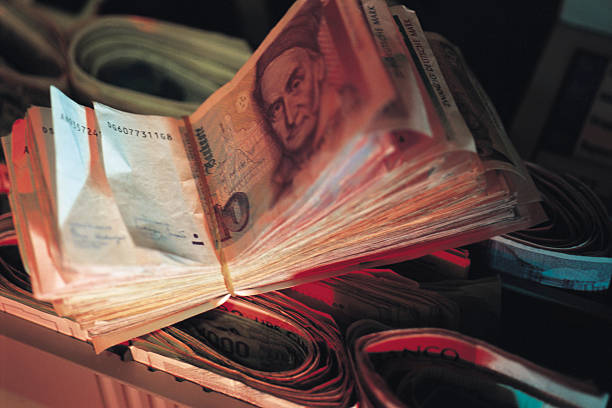
Counter-trend trading is one of the most alluring yet treacherous strategies in the foreign exchange market. It promises the thrill of catching reversals at market extremes, buying low and selling high, or selling high and buying low, in direct opposition to prevailing momentum. For casual and moderately active investors on ForexTrades.net, understanding why this approach is almost universally cautioned against for newcomers is essential, not as a prohibition but as a sobering reality check. The core problem is not that counter-trend trading cannot be profitable; it is that the psychological and technical demands required to execute it safely are far beyond what typical beginners possess, and the risks of catastrophic loss are disproportionately high.
At its simplest, counter-trend trading involves entering a position against the current dominant market direction. If the euro is in a strong uptrend against the dollar, a counter-trend trader attempts to short it at a perceived peak, betting that the upward move has exhausted itself. The fundamental premise is that markets do not move in straight lines; they oscillate, retrace, and occasionally reverse completely. The strategy attempts to capture profits from these inevitable pullbacks or full reversals rather than riding the trend itself. This sounds rational enough, but in practice, it requires exquisite timing, rigorous risk management, and an unshakeable ability to withstand prolonged adverse price action.
The single greatest risk in counter-trend trading is the potential for unlimited losses from a failed trade. Unlike trend-following strategies, where a stop-loss placed beyond a recent swing high or low provides a clear, logical exit point, counter-trend entries often have no natural limit to how far the market can move against them. A trader who sells the dollar against the yen at what appears to be a resistance level may watch the dollar surge higher for days or weeks, turning what was meant as a quick scalp into a margin-crippling hold. Beginner traders, lacking experience, frequently fall into the trap of averaging down, adding to a losing counter-trend position in a desperate attempt to prove their analysis correct. This behavior has destroyed countless trading accounts and is a direct consequence of the emotional difficulty of admitting a counter-trend call was wrong.
Another critical risk is the impossibility of distinguishing a temporary pullback from a full trend reversal in real time. A counter-trend trader must enter precisely at a turning point, but markets rarely announce their intentions. What looks like a topping pattern may simply be a pause before an even stronger leg higher. The beginner has no reliable methodology to differentiate these scenarios and often relies on weak indicators like oversold or overbought readings from oscillators such as RSI or Stochastic. These indicators can remain in overbought territory for extended periods during powerful trends, generating multiple false signals that bleed capital slowly but decisively. Professional counter-trend traders use complex confluence of price action, volume profile, and intermarket analysis to increase probability, skills that take years to develop.
Furthermore, counter-trend strategies expose traders to gap risk and news-driven volatility in a way that trend following does not. When a major central bank announcement or geopolitical event occurs, the market often gaps sharply in the direction of the dominant trend, bypassing stop-loss orders entirely. A counter-trend position, already at a disadvantage, becomes instantly catastrophic. The beginner who believes they are buying a dip may find themselves holding a position that opens hundreds of pips below their entry before they can even react. This is not a hypothetical scenario; it happens routinely in markets like USD/JPY or GBP/USD during non-farm payroll releases or interest rate decisions.
The psychological toll on a beginner attempting counter-trend trading is equally damaging. The constant fear of being run over by the trend creates hesitation and inconsistent execution. When a trade does work, the beginner often exits too early, losing the bulk of the potential profit, because they lack confidence in their analysis. When it fails, they hold too long, hoping for a turnaround that never comes. This pattern creates a negative feedback loop that erodes discipline. Contrary to popular belief, trend following actually lowers psychological strain because the trader is aligning with the market’s natural flow, reducing cognitive dissonance. Counter-trend trading demands that you constantly fight the market, and most beginners simply do not have the emotional maturity to do this without making destructive decisions.
For investors on ForexTrades.net who wish to explore counter-trend concepts, the only responsible path is to wait until you have demonstrable proficiency in trend following for at least six to twelve months of live trading. During that period, you should meticulously study market cycles, learn to identify exhaustion patterns like double tops, divergences, and pin bars on higher timeframes, and practice calculating realistic risk-to-reward ratios. Never attempt counter-trend trades on lower than the four-hour chart, as noise there is overwhelming. Use a stop-loss at least double the average true range of the pair you are trading, and never risk more than one percent of your account on any single counter-trend entry. Even then, expect a high failure rate; the goal is not to be right often, but to make the occasional winning trade large enough to offset many small losses.
In summary, counter-trend trading is a high-risk, low-reward endeavor for beginners because it demands advanced technical analysis, exceptional discipline, and a robust capacity to withstand large adverse moves. The trend is your friend for good reason; fighting it without a profound understanding of market dynamics is a fast track to account depletion. Build your foundation first, respect the trend, and only consider counter-trend methods when you have earned the experience to handle their unique dangers.



Currency Quotes
EUR-USD


Current
1.0921Change
-0.0012
USD-JPY

Current
158.45Change
+0.22
GBP-USD

Current
1.2985Change
+0.0008
USD-CHF

Current
0.8842Change
-0.0005
AUD-USD

Current
0.6754Change
-0.0021
USD-CAD

Current
1.3688Change
+0.0015
NZD-USD

Current
0.6123Change
-0.0018
EUR-JPY
Current
173.05Change
+0.1
GBP-JPY
Current
205.74Change
+0.35
EUR-GBP
Current
0.8410Change
-0.0019
AUD-JPY
Current
107.03Change
-0.15
EUR-CHF
Current
0.9656Change
-0.0008
USD-CNY

Current
7.2514Change
+0.0002
USD-HKD

Current
7.8055Change
+0.0001
USD-SGD

Current
1.3442Change
+0.0004
USD-SEK

Current
10.5521Change
+0.021
USD-NOK

Current
10.7435Change
+0.0315
USD-DKK

Current
6.9452Change
+0.004
GBP-CHF
Current
1.1481Change
+0.0003
AUD-CAD
Current
0.9244Change
-0.0022
CAD-JPY
Current
115.76Change
+0.08
NZD-JPY
Current
97.02Change
-0.05
CHF-JPY
Current
179.20Change
+0.25
EUR-CAD
Current
1.4948Change
+0.0005
GBP-CAD
Current
1.7773Change
+0.0025
AUD-CHF
Current
0.5972Change
-0.002
NZD-CHF
Current
0.5414Change
-0.0016
CAD-CHF
Current
0.6460Change
-0.0004
EUR-AUD
Current
1.6170Change
+0.0015
GBP-AUD
Current
1.9225Change
+0.0045
EUR-NZD
Current
1.7836Change
+0.002
GBP-NZD
Current
2.1206Change
+0.005
AUD-NZD
Current
1.1030Change
-0.0005
USD-MXN

Current
17.6520Change
+0.051
USD-ZAR

Current
18.2540Change
-0.082
USD-TRY

Current
33.1550Change
+0.024
USD-INR

Current
83.6210Change
+0.011
USD-BRL

Current
5.4820Change
-0.031
USD-KRW

Current
1378.45Change
+2.15
USD-PLN

Current
3.9650Change
-0.005
USD-HUF

Current
362.45Change
+0.85
USD-CZK

Current
23.1250Change
+0.035
USD-ILS

Current
3.6840Change
-0.008
USD-CLP

Current
945.20Change
+2.1
USD-PHP

Current
58.75Change
+0.12
USD-THB

Current
36.15Change
+0.05
USD-IDR

Current
16180.00Change
+25
USD-MYR

Current
4.6850Change
-0.002
USD-VND

Current
25450.00Change
+5
USD-RUB

Current
88.50Change
+0.25
EUR-MXN
Current
19.1365Change
+0.025