
Quantitative easing weakens a currency
For traders on ForexTrades.net, understanding how central bank policies directly impact currency valuation is not optional—it is the foundation of informed decision-making. Among the most powerful and misunderstood tools in a central bank’s arsenal is quantitative easing (QE). When a central bank engages in QE, it effectively creates new money to purchase government bonds or other financial assets. The immediate goal is to inject liquidity into the economy, lower interest rates, and stimulate borrowing and spending. But for forex traders, the predictable and often dramatic consequence is a depreciation of the national currency. This is not a side effect; it is a direct function of supply and demand dynamics that lie at the heart of how forex trading works.
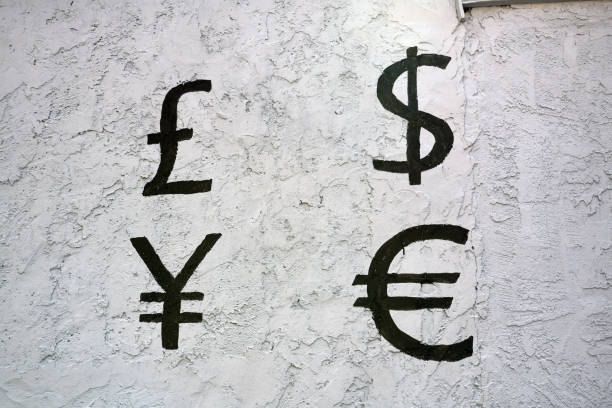
Every currency trade is a simultaneous purchase of one currency and sale of another. The price of a currency pair, such as EUR/USD or USD/JPY, reflects the relative value between two economies. When a central bank like the Federal Reserve or the European Central Bank implements QE, it increases the supply of its own currency in the global market. Basic economic principles dictate that when supply increases while demand remains constant or grows more slowly, price falls. In forex, a falling price means a weaker currency. QE floods the system with new units of that currency, reducing its scarcity. Traders who understand this mechanism can anticipate weakening trends and position themselves accordingly—either by shorting that currency against a stronger counterpart or by moving into assets denominated in currencies from economies not engaging in such expansion.
The role of central banks in currency valuation extends beyond the mere act of printing money. QE signals to the market that the central bank is prioritizing domestic economic stimulus over currency strength. This signal is critical because forex markets are driven by expectations. When traders anticipate QE, they begin selling the currency in advance, pricing in the expected dilution. Once QE is announced or implemented, the currency often experiences a sharp decline, followed by a prolonged period of weakness until the program ends or market sentiment shifts. For example, during the global financial crisis and the COVID-19 pandemic, the Bank of Japan and the Federal Reserve engaged in massive QE programs. The Japanese yen and the U.S. dollar both weakened significantly against currencies from economies with tighter monetary policies, such as the Swiss franc or the New Zealand dollar.
For the active forex trader, this knowledge translates into actionable strategy. QE cycles create clear trend opportunities. When a central bank announces a new round of QE, it is typically a sell signal for that currency. Conversely, when a central bank begins tapering or ending QE, it signals potential strengthening. The key is to monitor central bank communications, meeting minutes, and economic data releases that might foreshadow policy shifts. Advanced traders also watch for relative QE—comparing the scale and pace of asset purchases across different central banks. If the European Central Bank is buying aggressively while the Federal Reserve is pausing, the euro is likely to weaken against the dollar. This relative analysis is more powerful than looking at QE in isolation.
Another critical nuance is the impact of QE on interest rate differentials. QE typically compresses long-term interest rates. When a currency’s yield advantage shrinks, demand for that currency from yield-seeking investors decreases. In forex, carry trades rely on borrowing low-yielding currencies and investing in higher-yielding ones. QE collapses the yield on the QE-implementing currency, making it an ideal funding currency for carry trades. This further depresses its value. For instance, the Japanese yen has been a favorite funding currency for years precisely because the Bank of Japan’s persistent QE kept yields near zero, while traders borrowed yen to buy higher-yielding Australian or New Zealand dollars.
A common mistake among casual traders is assuming that QE always leads to immediate and uniform weakness. In reality, the market often prices in expectations well before the actual implementation. If a currency has already fallen sharply in anticipation of QE, the announcement itself might trigger a “sell the rumor, buy the fact” reversal. Additionally, if QE is seen as successfully reviving economic growth, the currency might eventually recover as investors anticipate future rate hikes. But in the short to medium term, the supply-side pressure is dominant. For the moderately active investor, the safest approach is to treat QE as a structural headwind for a currency, not a temporary blip.
ForexTrades.net emphasizes that understanding central bank actions like QE is not about predicting the future with certainty. It is about stacking probabilities in your favor. When you see a central bank engaging in aggressive QE while another maintains or tightens policy, the directional bias is clear. The currency with the expanding money supply is likely to weaken against the one with constrained supply. This is not speculation; it is the fundamental logic of how foreign exchange markets price relative value. By integrating this knowledge into your trading plan, you move beyond guesswork and into systematic analysis. Quantitative easing weakens a currency because it increases its supply, lowers its yield, and signals a dovish policy bias. For the forex trader, that is a signal worth acting on.