
Real-world examples of major pair quotes
Understanding how major currency pairs are quoted is the foundation of every successful forex trade. For investors at ForexTrades.net, grasping the relationship between the base currency and the quote currency is not just academic—it is the difference between a profitable entry and a costly misunderstanding. When you look at a pair like EUR/USD at 1.1050, you are not seeing a random number; you are seeing the price of one euro expressed in U.S. dollars. This simple concept carries profound implications for risk management, position sizing, and profit calculation. Let us examine what real-world major pair quotes actually tell you and how to interpret them with precision.
The euro versus the U.S. dollar, or EUR/USD, remains the most traded currency pair globally and offers the clearest illustration of base and quote currency dynamics. When the quote reads 1.1050, it means that one euro (the base currency) costs 1.1050 U.S. dollars (the quote currency). If you believe the euro will strengthen against the dollar, you buy the pair. If the price rises to 1.1100, you have earned 50 pips of profit. But here is the nuance that intermediate traders often overlook: your profit or loss is denominated in the quote currency. On a standard lot of 100,000 units, each pip move in EUR/USD is worth $10. This direct relationship exists because the dollar is the quote currency. Change the pair, and the pip value changes accordingly.
Consider GBP/USD, often called cable, at 1.2700. One British pound buys 1.27 U.S. dollars. The mechanics are identical to EUR/USD in that the base currency is the first listed and the quote currency is the second. However, the price volatility differs. GBP/USD frequently moves in larger intraday ranges than EUR/USD because of the pound’s sensitivity to UK economic data and political events. When you see a sudden spike from 1.2700 to 1.2750, that 50-pip move represents a $500 change in value on a standard lot. The base currency here is the pound, and your risk is always expressed in the quote currency. This is why advanced traders do not simply look at the price; they calculate their exposure in their account’s base currency.
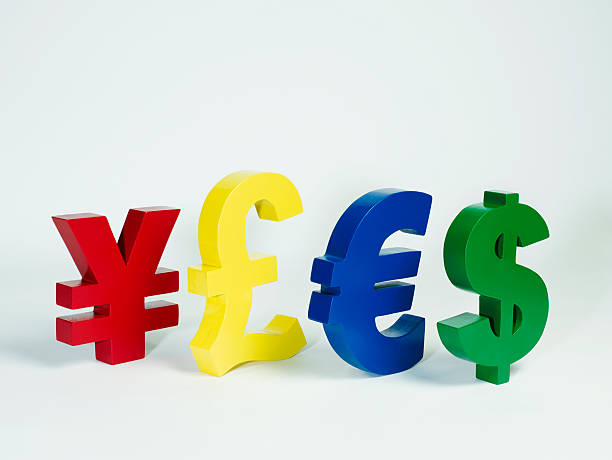
Now look at USD/JPY, a pair where the quote currency is the Japanese yen. At a quote of 149.50, one U.S. dollar buys 149.50 yen. The base currency is the dollar, and the quote currency is the yen. The decimal structure changes because yen quotes typically go to two decimal places instead of four. A pip in USD/JPY is the second decimal place, so a move from 149.50 to 149.60 is a ten-pip move. But here is where the real-world application matters: the pip value on a standard lot is roughly 1,000 yen. If your trading account is denominated in dollars, you must convert that yen value back into dollars to understand your risk. At a USD/JPY rate of 149.50, 1,000 yen equals about $6.69. This conversion is not optional; it is a mandatory calculation for any trader who does not maintain a yen-denominated account. Ignoring this step leads to serious position-sizing errors outright.
AUD/USD, the Australian dollar against the U.S. dollar, provides another critical example. At 0.6400, one Australian dollar buys 64 U.S. cents. Because the quote currency is the dollar, the pip value on a standard lot remains $10. But the Australian dollar is often used as a proxy for commodity prices and Chinese economic data. When gold prices rise or China releases strong manufacturing numbers, AUD/USD tends to rally. The quote structure is identical to EUR/USD, but the fundamental drivers are completely different. This highlights a key point: the quote format tells you nothing about the pair’s behavior; it only tells you how to read the price and calculate value.
Understanding these real-world examples transforms your approach from memorizing numbers to interpreting market structure. When you see EUR/USD at 1.1050, you know the euro is the base and your profit or loss will be in dollars. When you see USD/JPY at 149.50, you know the dollar is the base and your risk must be converted to your account currency. This knowledge allows you to trade with confidence across multiple pairs without confusion. At ForexTrades.net, we emphasize that the base and quote currency structure is the grammar of the forex market. Learn this grammar, and the market’s sentences become clear. Ignore it, and even the most promising trade setup can lead to unintended losses. Every professional trader calculates their pip values before entering a trade, and now you understand exactly why that discipline matters in the real world of currency trading.