
Sentiment extremes signal potential reversals
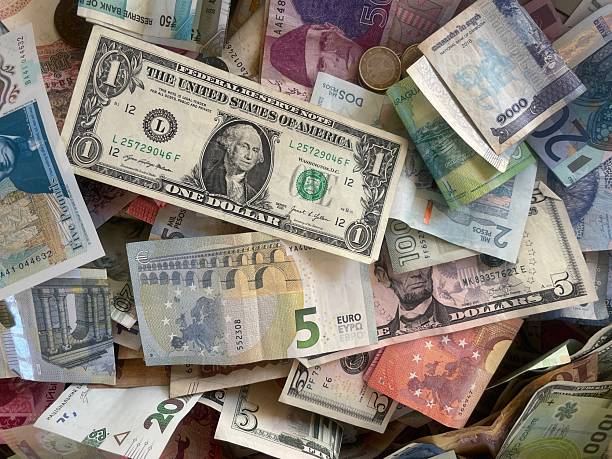
On ForexTrades.net, our subsection on market sentiment and risk appetite often reveals the hidden drivers behind currency moves. While fundamental analysis—interest rates, inflation, trade balances—provides the backbone of exchange rate determination, the most reliable leading indicators are often the least quantitative. When sentiment swings to an extreme, whether euphoric or panicked, the market is preparing to reverse. Understanding this dynamic is critical for casual and moderately active investors who want to trade currencies safely and profitably.
Exchange rates are not simply a function of economic data releases. They are the product of millions of individual decisions, each colored by fear, greed, and herd behavior. The factors influencing exchange rates can be grouped into four broad categories: interest rate differentials, economic growth differentials, terms of trade, and political stability. But these are the slow-moving fundamentals. The fast-moving trigger is sentiment. When the market becomes uniformly bullish on a currency, the price has already absorbed all available good news. At that point, there is no one left to buy. The only direction left is down. Conversely, when bearishness reaches a fever pitch and every trader is short, the selling pressure is exhausted, and a sharp rally follows.
Consider the U.S. dollar during a risk-off event. When global uncertainty spikes, investors flee to the dollar as a safe haven. This drives the dollar higher, often beyond what economic fundamentals justify. The sentiment indicator to watch here is the put-call ratio on currency options or the Commitments of Traders report from the CFTC. When speculative short positions on riskier currencies like the Australian dollar or the New Zealand dollar reach extreme levels, the reversal probability skyrockets. The same logic applies to the yen during a carry trade unwind. When everyone is long yen as a safe haven, the move is ripe for a snapback.
The relationship between sentiment and exchange rates is not linear. A moderate shift in sentiment can produce a moderate price move. But an extreme—for example, a reading in the 95th percentile of historical sentiment data—often precedes a violent reversal. This is because the market forgets that fundamentals eventually reassert themselves. A currency that has become severely undervalued due to panic selling will attract bargain hunters. A currency that has become overvalued due to euphoria will see profit-taking and short sellers. The trick is knowing when the market has gone too far.
Risk appetite is the emotional thermostat of the forex market. When risk appetite is high, investors chase yield and buy high-beta currencies like the South African rand or the Mexican peso. When risk appetite collapses, they pile into the dollar, yen, and Swiss franc. But these moves are self-limiting. As more traders pile into the safe-haven trade, its return diminishes. The yield differential between safe and risky assets widens to unsustainable levels. Eventually, the lure of that yield pulls capital back into the risky currencies, triggering a reversal. This is why the forex trader must monitor not just the price action but the sentiment data that accompanies it.
One practical way to gauge sentiment extremes is to look at the ratio of bullish to bearish forecasts from major banks and brokerages. When 80 percent of analysts are bullish on the euro, that is a contrarian sell signal. When 80 percent are bearish, it is a buy signal. This works because analysts, like retail traders, tend to extrapolate recent trends indefinitely. They are late to the turning point. The professional trader knows that the best opportunities come when the consensus is most one-sided.
Another powerful sentiment tool is the volatility index, particularly implied volatility from currency options. When implied volatility spikes, it indicates fear and uncertainty. This often coincides with a sentiment extreme. For example, if the dollar-yen pair sees a sudden explosion in implied volatility and the spot price has already moved sharply in one direction, the reversal is near. The market is pricing in risk of a catastrophic move, but that move has likely already occurred. Once the volatility subsides, the currency often reverses against the prevailing trend.
The key takeaway for the ForexTrades.net reader is that sentiment extremes are not to be avoided but exploited. They are the market’s way of resetting the board. When everyone is bearish on sterling, the pound is cheap. When everyone is bullish on the dollar, it is expensive. The factors influencing exchange rates—interest rates, growth, trade, politics—do not change overnight. But sentiment does. And it is in those moments of emotional excess that the savvy trader finds the most asymmetric risk-reward setups.
To trade safely, you must resist the urge to join the crowd at the extremes. Instead, position yourself for the mean reversion. Watch the Commitments of Traders report, monitor implied volatility, and track analyst sentiment polls. When the numbers scream “this currency can only go in one direction,“ that is the moment to wait for the turn. The reversal will come—not because the fundamentals have shifted, but because the market has priced them in too well. Sentiment extremes are the alarm bells of the forex market. Heed them.