
Stable governments attract foreign investment
In the foreign exchange market, currency values are not merely a function of interest rate differentials or trade balances. Beneath those surface-level metrics lies a far more foundational driver: political stability. For traders operating on ForexTrades.net, understanding how governmental stability—or its absence—shapes capital flows and exchange rates is essential for long-term positioning and risk management. Political stability is the bedrock upon which investor confidence is built, and when that bedrock cracks, currencies tend to follow.
The mechanism is straightforward but powerful. Stable governments create predictable regulatory environments, enforce property rights, and maintain consistent fiscal and monetary policies. These conditions lower the perceived risk for foreign investors. When a country enjoys a stable political climate, international capital flows in more freely, both as foreign direct investment and as portfolio investment. This influx of foreign currency creates demand for the domestic currency, pushing its exchange rate higher relative to others. Conversely, political turmoil, election uncertainty, or geopolitical tensions trigger capital flight, as investors rush to repatriate funds or move them into safe-haven currencies such as the U.S. dollar, Swiss franc, or Japanese yen. The resulting sell-off in the domestic currency can be swift and severe.
Consider the case of emerging market currencies. Countries like Chile or Poland, which have maintained stable democratic institutions and transparent legal systems, tend to see their currencies attract steady foreign investment. Investors know that their capital will not be expropriated, contracts will be honored, and policy will not reverse overnight. This stability allows central banks in such nations to focus on inflation targeting and growth rather than crisis management, further reinforcing currency strength. In contrast, nations with frequent changes in government, widespread corruption, or unresolved internal conflicts often see their currencies trading at a persistent discount. Investors demand a risk premium to hold assets denominated in those currencies, which manifests as a weaker exchange rate and higher borrowing costs for the government.
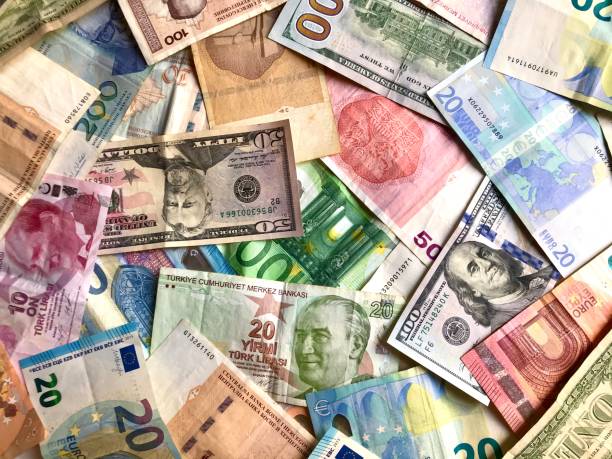
Geopolitical risks amplify these dynamics. A country whose government is stable internally but faces external threats—such as tariff disputes with a major trading partner, military tensions with a neighbor, or sanctions from a global power—will see its currency affected as well. The Russian ruble and Turkish lira are prime examples. Both currencies have suffered severe depreciation episodes driven not by domestic economic fundamentals alone but by geopolitical shocks that undermined investor confidence in the stability of government decision-making. In the case of Turkey, political interference in monetary policy and a weakening of institutional independence created a feedback loop: as the government’s credibility eroded, foreign investment dried up, the lira depreciated, and inflation surged, further destabilizing the political environment. Forex traders must watch not just election polls but also signals about central bank independence, judicial reliability, and regulatory transparency.
The link between political stability and exchange rates is not a one-way street. A stable government that implements sound economic policies can attract investment, strengthen the currency, and lower inflation. But a currency crisis can also destabilize a government. For example, a sudden depreciation raises import costs, fuels inflation, and erodes real incomes. If the government is perceived as unable or unwilling to address the crisis, public discontent can grow, leading to protests, leadership changes, or even regime collapse. This creates a vicious cycle: political instability drives currency weakness, and currency weakness drives further political instability. Forex traders should therefore treat political risk not as a static factor but as a dynamic variable that can shift rapidly, especially in countries with shallow institutional roots.
For the practical trader, this means that assessing a country’s political stability is not optional—it is foundational. Before taking a long position in any currency pair, ask whether the governing institutions are durable, whether the rule of law is respected, and whether there are credible threats to the current political order. Watch for indicators such as sovereign credit rating changes, the frequency of cabinet reshuffles, legislative gridlock over budget negotiations, and the independence of the judiciary. Tools like the World Bank’s Worldwide Governance Indicators or the Economist Intelligence Unit’s Democracy Index can provide quantitative benchmarks. Even for moderately active traders, tracking political news from credible sources is as important as following interest rate announcements.
In summary, stable governments are the silent engines that drive foreign investment and currency strength. They reduce uncertainty, lower risk premiums, and attract the capital flows that support higher exchange rates. Geopolitical risks, by contrast, introduce volatility that can overwhelm even the strongest technical or fundamental analysis. For traders on ForexTrades.net, integrating political stability into your analysis is not about predicting the next coup or election outcome. It is about recognizing that the health of a nation’s governance is the invisible hand that guides its currency’s long-term trajectory. Ignore it, and you trade blind. Respect it, and you trade with an edge.