

- USD-JPY 158.45 (+0.22 )
- GBP-USD 1.2985 (+0.0008 )
- USD-CHF 0.8842 (-0.0005 )
- AUD-USD 0.6754 (-0.0021 )
- USD-CAD 1.3688 (+0.0015 )
- NZD-USD 0.6123 (-0.0018 )
- EUR-JPY 173.05 (+0.1 )
- GBP-JPY 205.74 (+0.35 )
- EUR-GBP 0.8410 (-0.0019 )
- AUD-JPY 107.03 (-0.15 )
- EUR-CHF 0.9656 (-0.0008 )
- USD-CNY 7.2514 (+0.0002 )
- USD-HKD 7.8055 (+0.0001 )
- USD-SGD 1.3442 (+0.0004 )
- USD-SEK 10.5521 (+0.021 )
- USD-NOK 10.7435 (+0.0315 )
- USD-DKK 6.9452 (+0.004 )
- GBP-CHF 1.1481 (+0.0003 )
- AUD-CAD 0.9244 (-0.0022 )
- CAD-JPY 115.76 (+0.08 )
- NZD-JPY 97.02 (-0.05 )
- CHF-JPY 179.20 (+0.25 )
- EUR-CAD 1.4948 (+0.0005 )
- GBP-CAD 1.7773 (+0.0025 )
- AUD-CHF 0.5972 (-0.002 )
- NZD-CHF 0.5414 (-0.0016 )
- CAD-CHF 0.6460 (-0.0004 )
- EUR-AUD 1.6170 (+0.0015 )
- GBP-AUD 1.9225 (+0.0045 )
- EUR-NZD 1.7836 (+0.002 )
- GBP-NZD 2.1206 (+0.005 )
- AUD-NZD 1.1030 (-0.0005 )
- USD-MXN 17.6520 (+0.051 )
- USD-ZAR 18.2540 (-0.082 )
- USD-TRY 33.1550 (+0.024 )
- USD-INR 83.6210 (+0.011 )
- USD-BRL 5.4820 (-0.031 )
- USD-KRW 1378.45 (+2.15 )
- USD-PLN 3.9650 (-0.005 )
- USD-HUF 362.45 (+0.85 )
- USD-CZK 23.1250 (+0.035 )
- USD-ILS 3.6840 (-0.008 )
- USD-CLP 945.20 (+2.1 )
- USD-PHP 58.75 (+0.12 )
- USD-THB 36.15 (+0.05 )
- USD-IDR 16180.00 (+25 )
- USD-MYR 4.6850 (-0.002 )
- USD-VND 25450.00 (+5 )
- USD-RUB 88.50 (+0.25 )
- EUR-MXN 19.1365 (+0.025 )
- EUR-ZAR 19.7750 (-0.11 )
- EUR-TRY 35.9150 (+0.045 )
- EUR-PLN 4.2980 (-0.006 )
- EUR-HUF 392.85 (+0.65 )
- EUR-CZK 25.0560 (+0.015 )
- GBP-MXN 22.7750 (+0.065 )
- GBP-ZAR 23.5420 (-0.12 )
- GBP-TRY 42.7560 (+0.085 )
- GBP-PLN 5.1180 (-0.002 )
- AUD-CNY 4.9015 (-0.012 )
- AUD-HKD 5.2725 (-0.015 )
- AUD-SGD 0.9078 (-0.0025 )
- CAD-CNY 5.2975 (+0.008 )
- CAD-HKD 5.6980 (+0.005 )
- CAD-SGD 0.9815 (+0.0012 )
- NZD-CNY 4.4395 (-0.011 )
- NZD-HKD 4.7750 (-0.014 )
- NZD-SGD 0.8226 (-0.0022 )
- CHF-CNY 8.1990 (-0.004 )
- CHF-HKD 8.8185 (-0.0035 )
- CHF-SGD 1.5185 (-0.0005 )
- JPY-CNY 0.0458 (-0.0001 )
- JPY-HKD 0.0493 (-0.0001 )
- JPY-SGD 0.0085 (-0.0001 )
- EUR-SGD 1.4682 (-0.001 )
- GBP-SGD 1.7458 (+0.0015 )
- EUR-HKD 8.5285 (-0.009 )
- GBP-HKD 10.1385 (+0.0055 )
- EUR-CNY 7.9195 (-0.008 )
- GBP-CNY 9.4185 (+0.005 )
- USD-SAR 3.7505 (+0 )
- USD-AED 3.6730 (+0 )
- USD-QAR 3.6410 (+0.0001 )
- USD-KWD 0.3065 (+0.0001 )
- EUR-SAR 4.0955 (-0.0045 )
- EUR-AED 4.0115 (-0.0044 )
- GBP-SAR 4.8705 (+0.003 )
- GBP-AED 4.7715 (+0.003 )
- AUD-SAR 2.5325 (-0.008 )
- AUD-AED 2.4810 (-0.0078 )
- CAD-SAR 5.1295 (+0.0055 )
- CAD-AED 5.0255 (+0.0055 )
- NZD-SAR 2.2965 (-0.0068 )
- NZD-AED 2.2495 (-0.0066 )
- CHF-SAR 3.3155 (-0.0018 )
- CHF-AED 3.2475 (-0.0018 )
- JPY-SAR 0.0237 (+0.0001 )
- JPY-AED 0.0232 (+0.0001 )
- EUR-DKK 7.4585 (-0.0005 )
Asian session starts in Tokyo and Sydney
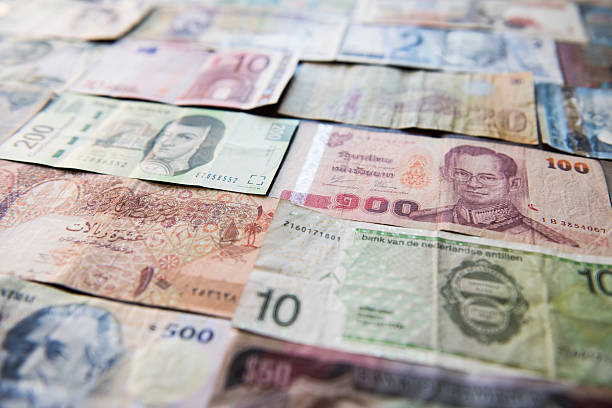
When the sun rises over Tokyo and Sydney, the global forex market enters a phase that many retail traders underestimate. The Asian session, which kicks off at 7:00 PM EST Sunday and runs until approximately 4:00 AM EST, is not merely a slow prelude to the explosive London and New York sessions. It is a distinct market environment with its own structural rules, liquidity patterns, and strategic opportunities. For traders on ForexTrades.net who aim to navigate the market with precision, understanding the structural dynamics of the Asian session is not optional; it is essential.
The market structure of the Asian session is defined first and foremost by the currencies that dominate trading. The Japanese yen and the Australian dollar are the primary drivers of price action during these hours. This means that pairs such as USD/JPY, AUD/USD, NZD/USD, and cross pairs like AUD/JPY and NZD/JPY experience the highest volume and liquidity. Other major pairs, particularly those involving the euro or the pound, tend to trade in narrower ranges. The reason is simple: the European and American financial centers are closed, and the majority of orders flowing into the market originate from Asia-Pacific institutions, central banks, and corporations. This concentration of capital creates a unique structural environment where price movements are often more technical, less volatile, and heavily influenced by regional economic data releases.
One of the most critical structural features of the Asian session is the absence of overlapping liquidity from other major sessions. Unlike the European and US sessions, which overlap for several hours, the Asian session stands alone. This means that spreads tend to widen, especially for less liquid pairs like GBP/JPY or EUR/CHF, and that price action can become choppy or range-bound. Traders who expect the same level of volatility or trend intensity seen during the London open will be disappointed. Instead, the Asian session often consolidates the trading ranges established during the prior US session. This consolidation is not noise; it is a structural signal. When price holds a level during the Asian session and refuses to break, that level often becomes a key reference point for the European session that follows.
Understanding this consolidation behavior is the foundation of a profitable Asian session strategy. Because the session is driven by less aggressive speculative flow, support and resistance levels formed during these hours are often more reliable than those formed during high-volume sessions. A breakout during the Asian session should be viewed with skepticism unless it is accompanied by a clear catalyst, such as a Bank of Japan intervention, an Australian employment report, or a surprise Chinese economic indicator. Without such catalysts, Asian session breakouts are frequently false, trapping retail traders who chase momentum. Instead, the prudent approach is to observe the structure: identify the high and low of the first two hours of the session, and treat that range as the battleground for the rest of the night.
A second structural consideration is the relationship between the Asian session and the subsequent European open. Seasoned traders on ForexTrades.net understand that the Asian session often sets the tone for the London session, but rarely dictates its direction. The best analogy is that of a spring. During the Asian hours, price compresses into a tight range as liquidity is thin and participants are waiting for the next major driver. When London opens, that spring releases. The direction of the release is heavily influenced by whether the Asian session range was bullish or bearish relative to the prior day’s close. If the Asian session establishes a higher low than the previous day’s low, the bias for the European session is often upward. Conversely, if the Asian session fails to hold above the prior day’s high, the bias is frequently bearish. This structural relationship gives traders a clear framework for positioning ahead of the London open.
Liquidity is another structural pillar that demands attention. During the Asian session, the largest liquidity providers are the Bank of Japan, the Reserve Bank of Australia, and the Reserve Bank of New Zealand. These institutions do not trade for profit; they trade for policy implementation and currency management. This means that price behavior around key intervention levels, such as the 150.00 level in USD/JPY, is often sharp and mechanical. Traders who ignore these structural intervention zones risk catastrophic losses. For example, if USD/JPY approaches a level where the Bank of Japan has historically intervened, the market will thin out dramatically and orders will stack. Price may spike violently in one direction before reversing just as quickly. This is not a market structure that rewards amateur speculation.
Finally, the Asian session offers a structural advantage for traders who use position sizing and stop management to their benefit. Because ranges are narrower, stop losses can be placed tighter, allowing for higher risk-to-reward ratios when the trade eventually aligns with a European session breakout. A trader who buys AUD/USD at the top of a quiet Asian range with a 15-pip stop and a target of 50 pips in London is using market structure to their advantage. They are not fighting the session; they are using it as a filter.
In summary, the Asian session is not a dead zone. It is a structurally distinct market environment where liquidity is concentrated in specific pairs, price behavior is largely consolidative, and the relationship to the European open is predictable. For the casual and moderately active investor on ForexTrades.net, mastering the structure of this session means gaining a powerful edge. It means knowing when to trade, which pairs to trade, and most importantly, when to step aside. The Asian session rewards patience, technical discipline, and a deep respect for the unique liquidity dynamics that define these early hours.




Currency Quotes
EUR-USD


Current
1.0921Change
-0.0012
USD-JPY

Current
158.45Change
+0.22
GBP-USD

Current
1.2985Change
+0.0008
USD-CHF

Current
0.8842Change
-0.0005
AUD-USD

Current
0.6754Change
-0.0021
USD-CAD

Current
1.3688Change
+0.0015
NZD-USD

Current
0.6123Change
-0.0018
EUR-JPY
Current
173.05Change
+0.1
GBP-JPY
Current
205.74Change
+0.35
EUR-GBP
Current
0.8410Change
-0.0019
AUD-JPY
Current
107.03Change
-0.15
EUR-CHF
Current
0.9656Change
-0.0008
USD-CNY

Current
7.2514Change
+0.0002
USD-HKD

Current
7.8055Change
+0.0001
USD-SGD

Current
1.3442Change
+0.0004
USD-SEK

Current
10.5521Change
+0.021
USD-NOK

Current
10.7435Change
+0.0315
USD-DKK

Current
6.9452Change
+0.004
GBP-CHF
Current
1.1481Change
+0.0003
AUD-CAD
Current
0.9244Change
-0.0022
CAD-JPY
Current
115.76Change
+0.08
NZD-JPY
Current
97.02Change
-0.05
CHF-JPY
Current
179.20Change
+0.25
EUR-CAD
Current
1.4948Change
+0.0005
GBP-CAD
Current
1.7773Change
+0.0025
AUD-CHF
Current
0.5972Change
-0.002
NZD-CHF
Current
0.5414Change
-0.0016
CAD-CHF
Current
0.6460Change
-0.0004
EUR-AUD
Current
1.6170Change
+0.0015
GBP-AUD
Current
1.9225Change
+0.0045
EUR-NZD
Current
1.7836Change
+0.002
GBP-NZD
Current
2.1206Change
+0.005
AUD-NZD
Current
1.1030Change
-0.0005
USD-MXN

Current
17.6520Change
+0.051
USD-ZAR

Current
18.2540Change
-0.082
USD-TRY

Current
33.1550Change
+0.024
USD-INR

Current
83.6210Change
+0.011
USD-BRL

Current
5.4820Change
-0.031
USD-KRW

Current
1378.45Change
+2.15
USD-PLN

Current
3.9650Change
-0.005
USD-HUF

Current
362.45Change
+0.85
USD-CZK

Current
23.1250Change
+0.035
USD-ILS

Current
3.6840Change
-0.008
USD-CLP

Current
945.20Change
+2.1
USD-PHP

Current
58.75Change
+0.12
USD-THB

Current
36.15Change
+0.05
USD-IDR

Current
16180.00Change
+25
USD-MYR

Current
4.6850Change
-0.002
USD-VND

Current
25450.00Change
+5
USD-RUB

Current
88.50Change
+0.25
EUR-MXN
Current
19.1365Change
+0.025