
Can turn a losing streak into disaster
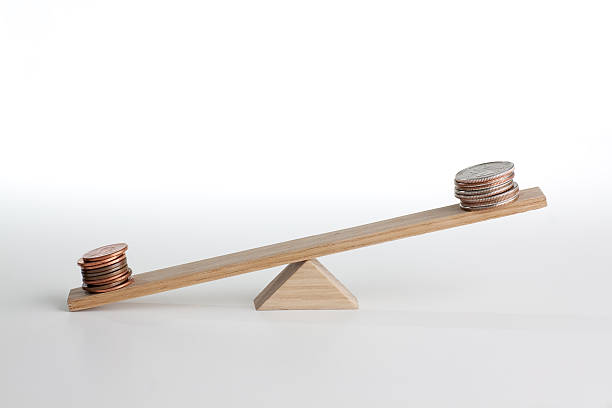
In the world of retail forex trading, a losing streak is not simply a statistical inevitability—it is the precise moment when leverage transforms a manageable drawdown into an account-wiping catastrophe. The relationship between leverage, margin, and consecutive losses is not linear, but exponential. Most traders understand that leverage amplifies gains. Far fewer grasp that it also amplifies the psychological and mechanical pressure of a losing streak, converting what might have been a 10% correction into a 100% blowout.
To understand this dynamic, you must first internalize the real-time mechanics of margin. When you open a leveraged position, your broker sets aside a percentage of your account equity as “used margin.” The remaining balance is your “free margin”—the ammunition you have left to absorb losses or open new trades. On a standard account with 50:1 leverage, a one-lot position on EUR/USD might require only two percent of the notional value as margin. That sounds harmless until you calculate the impact of a losing streak. Each consecutive loss does not simply reduce your balance by a fixed percentage; it reduces your free margin at an accelerating rate. As free margin approaches zero, you enter what is known as a margin call zone. At that point, even a single unexpected pip move can trigger automatic liquidation.
The critical point most overleveraged traders fail to recognize is that a losing streak is rarely a sequence of equal losses. Markets trend, and trends accelerate. If you are trading with high leverage, a four-loss streak is not four times more dangerous than a one-loss streak; it is exponentially more dangerous because the first loss reduces the margin cushion that would have absorbed the second. After the second loss, your position size remains the same, but your equity base is smaller—meaning the third loss represents a larger percentage of your remaining capital. By the fourth loss, you may be in a situation where a price move of only 15 pips is enough to trigger a stop-out, even if the market eventually turns in your favor. Your account does not blow up because you were wrong about the direction. It blows up because you had no structural room to be temporarily wrong five times in a row.
This is where the concept of “useable drawdown” becomes critical. The maximum drawdown you can survive is directly determined by your leverage ratio at the time of entry. A trader using 10:1 leverage on a $10,000 account can theoretically endure about a 1,000-pip adverse move on a standard lot before facing margin trouble, assuming they hold no other positions. A trader using 50:1 leverage on the same account, trading the same lot size, can survive only about 200 pips. But here is the nuance: the losing streak itself reduces your effective leverage capacity. After the first 200-pip loss, the 50:1 trader has already been stopped out. Their account is gone. The 10:1 trader still has $9,000 and can continue trading. The difference is not intelligence or strategy; it is the structural resilience built into the account through lower leverage.
There is also the insidious effect of “revenge scaling,” which often emerges during a losing streak. A trader who has suffered two consecutive losses with high leverage begins to feel the pressure of recovering lost equity. Instead of reducing position size, they often increase it, believing that a winning trade must be imminent. This is the psychological feedback loop that turns a losing streak into a disaster. By increasing position size while equity is already depleted, the trader effectively raises their leverage at the worst possible moment. The third loss, if it occurs, now hits a larger notional value with a smaller margin buffer. The result is a margin call that could have been avoided entirely if the trader had simply accepted the loss and stepped back.
The mathematical reality is simple: leverage does not care about your conviction. It does not care about your analysis of the next support level. It enforces a cold, binary logic. If your account equity falls below the required margin for your open positions, the broker will close your trades. There is no negotiation. The only way to survive a losing streak is to ensure that your position size is small enough relative to your account that even a statistically unusual series of losses leaves you with enough margin to stay in the game. Pro traders often operate at effective leverage ratios between 2:1 and 5:1, not 50:1. They understand that a losing streak is not a failure of analysis but a test of capital preservation. The trader who survives a five-loss streak with 80% of their account intact is in a far better position than the one who survived four wins but blew up on the fifth loss.
The lesson is blunt: if you overleverage your account, you are not trading forex. You are gambling on a margin call timer. You are betting that your streak of good luck will outlast the broker’s automated risk controls. And streaks, by definition, always end. The only question is whether you have built enough margin room to let the next winning streak find you still in the game.