
Central bank intervention can distort safe-haven status

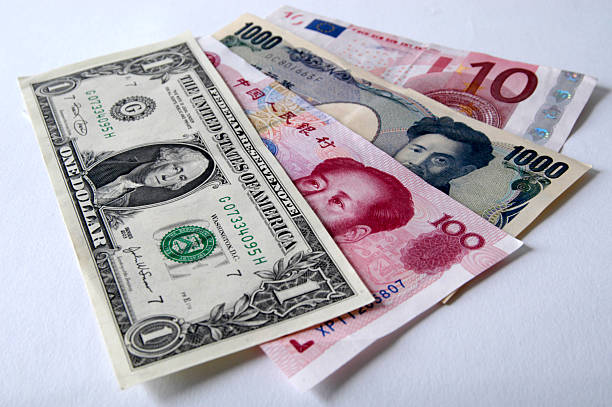
In the foreign exchange markets, the concept of a safe-haven currency is one of the most powerful yet fragile dynamics a trader can rely on. Traditionally, currencies like the US dollar, Swiss franc, and Japanese yen earn this label because investors flock to them during geopolitical turmoil, economic crises, or systemic financial stress. The underlying logic is simple: these currencies are backed by deep, liquid markets, strong institutions, and relative political stability. However, traders who treat safe-haven status as a fixed, immutable property are making a dangerous assumption. Central bank intervention, whether through direct market action, interest rate changes, or unconventional policy tools, can distort this status in ways that lead to significant mispricing and unexpected losses.
To understand why, one must first recognize that safe-haven demand is not a law of nature but a behavioral pattern rooted in investor expectations. When a crisis erupts, capital flows toward currencies perceived as least likely to depreciate or default. The Swiss franc, for example, became a classic safe haven not because Switzerland’s economy is immune to shocks, but because the Swiss National Bank (SNB) historically maintained a credible commitment to price stability and allowed the franc to appreciate freely. That changed dramatically in 2011 when the SNB imposed a ceiling on the franc’s value against the euro, capping its appreciation during the Eurozone debt crisis. The intervention distorted the very mechanism that made the franc safe. Traders who had counted on unlimited upside during risk-off moves were suddenly constrained by an artificial barrier. When the SNB abruptly abandoned the ceiling in 2015, the franc surged over 20 percent in minutes, decimating leveraged positions and destroying the predictive value of the safe-haven narrative.
The Japanese yen offers a more subtle but equally instructive example. For decades, the yen has been a go-to safe haven despite Japan’s massive public debt and low growth. The reason is that Japan runs a large current account surplus, and Japanese investors hold vast foreign assets. During risk-off episodes, repatriation of those assets bids up the yen. But the Bank of Japan’s aggressive monetary easing, including negative interest rates and yield curve control, intentionally weakens the yen to support exports and inflation. This creates a fundamental tension. The market’s safe-haven impulse pushes the yen higher, while the central bank’s policy framework pushes it lower. The result is a currency that oscillates between conflicting forces, making its crisis-era behavior increasingly unreliable. A trader relying on historical correlations between yen strength and equity market declines will get blindsided when the BoJ intervenes directly—as it did in 2022 and 2023—by selling dollars and buying yen to halt a runaway depreciation. That intervention does not restore safe-haven credibility; it introduces uncertainty about when the central bank will next step in and at what price.
Even the US dollar, the world’s primary reserve currency, is not immune to this distortion. The Federal Reserve’s response to the 2008 financial crisis and the COVID-19 pandemic involved massive quantitative easing and emergency lending facilities that flooded global markets with dollars. While this stabilized financial systems in the short term, it also eroded the dollar’s scarcity premium. During the pandemic’s peak in March 2020, the dollar spiked as investors scrambled for cash, but the Fed’s swift intervention—including swap lines with foreign central banks—quickly capped that rally. Traders who expected the dollar to continue climbing as the crisis deepened were forced to reckon with the reality that central bank policy, not just market sentiment, had become the dominant driver. The dollar remained a safe haven in name, but its price action was increasingly shaped by the Fed’s balance sheet decisions rather than by pure risk aversion.
The distortion works in both directions. Central banks can also create artificial safe-haven conditions where none naturally exist. Consider the Swiss franc before 2011. The SNB’s refusal to intervene for years allowed the franc to appreciate unchecked, reinforcing its safe-haven image. But that very image became self-reinforcing and dangerous. The more capital flowed in during crises, the more the SNB felt compelled to act, ultimately leading to the ceiling and its catastrophic removal. The central bank, in trying to manage the safe-haven effect, ended up magnifying its volatility.
For the Forex trader, the actionable lesson is clear. Safe-haven status is not a permanent label but a contingent relationship between market psychology and central bank behavior. You must monitor not just the news cycle or risk sentiment indices, but also the specific policy tools available to each central bank. Does the central bank have a history of pegging or capping its currency? Is it engaged in yield curve control or negative rates? Does it regularly use verbal intervention or covert market operations? If the answer to any of these is yes, the currency’s safe-haven response during the next crisis will likely deviate from historical patterns.
Central bank intervention does not destroy safe-haven status outright. It creates a new, more complex dynamic where the currency’s behavior depends on the interaction between market fear and policy response. The trader who recognizes this can avoid the trap of assuming a currency will behave as it always has. Instead, you must treat safe-haven status as a variable, not a constant—one that shifts every time a central banker speaks or a policy tool is deployed. In the end, the safest currency is not the one with the strongest historical reputation; it is the one whose central bank stays out of the way.