

- USD-JPY 158.45 (+0.22 )
- GBP-USD 1.2985 (+0.0008 )
- USD-CHF 0.8842 (-0.0005 )
- AUD-USD 0.6754 (-0.0021 )
- USD-CAD 1.3688 (+0.0015 )
- NZD-USD 0.6123 (-0.0018 )
- EUR-JPY 173.05 (+0.1 )
- GBP-JPY 205.74 (+0.35 )
- EUR-GBP 0.8410 (-0.0019 )
- AUD-JPY 107.03 (-0.15 )
- EUR-CHF 0.9656 (-0.0008 )
- USD-CNY 7.2514 (+0.0002 )
- USD-HKD 7.8055 (+0.0001 )
- USD-SGD 1.3442 (+0.0004 )
- USD-SEK 10.5521 (+0.021 )
- USD-NOK 10.7435 (+0.0315 )
- USD-DKK 6.9452 (+0.004 )
- GBP-CHF 1.1481 (+0.0003 )
- AUD-CAD 0.9244 (-0.0022 )
- CAD-JPY 115.76 (+0.08 )
- NZD-JPY 97.02 (-0.05 )
- CHF-JPY 179.20 (+0.25 )
- EUR-CAD 1.4948 (+0.0005 )
- GBP-CAD 1.7773 (+0.0025 )
- AUD-CHF 0.5972 (-0.002 )
- NZD-CHF 0.5414 (-0.0016 )
- CAD-CHF 0.6460 (-0.0004 )
- EUR-AUD 1.6170 (+0.0015 )
- GBP-AUD 1.9225 (+0.0045 )
- EUR-NZD 1.7836 (+0.002 )
- GBP-NZD 2.1206 (+0.005 )
- AUD-NZD 1.1030 (-0.0005 )
- USD-MXN 17.6520 (+0.051 )
- USD-ZAR 18.2540 (-0.082 )
- USD-TRY 33.1550 (+0.024 )
- USD-INR 83.6210 (+0.011 )
- USD-BRL 5.4820 (-0.031 )
- USD-KRW 1378.45 (+2.15 )
- USD-PLN 3.9650 (-0.005 )
- USD-HUF 362.45 (+0.85 )
- USD-CZK 23.1250 (+0.035 )
- USD-ILS 3.6840 (-0.008 )
- USD-CLP 945.20 (+2.1 )
- USD-PHP 58.75 (+0.12 )
- USD-THB 36.15 (+0.05 )
- USD-IDR 16180.00 (+25 )
- USD-MYR 4.6850 (-0.002 )
- USD-VND 25450.00 (+5 )
- USD-RUB 88.50 (+0.25 )
- EUR-MXN 19.1365 (+0.025 )
- EUR-ZAR 19.7750 (-0.11 )
- EUR-TRY 35.9150 (+0.045 )
- EUR-PLN 4.2980 (-0.006 )
- EUR-HUF 392.85 (+0.65 )
- EUR-CZK 25.0560 (+0.015 )
- GBP-MXN 22.7750 (+0.065 )
- GBP-ZAR 23.5420 (-0.12 )
- GBP-TRY 42.7560 (+0.085 )
- GBP-PLN 5.1180 (-0.002 )
- AUD-CNY 4.9015 (-0.012 )
- AUD-HKD 5.2725 (-0.015 )
- AUD-SGD 0.9078 (-0.0025 )
- CAD-CNY 5.2975 (+0.008 )
- CAD-HKD 5.6980 (+0.005 )
- CAD-SGD 0.9815 (+0.0012 )
- NZD-CNY 4.4395 (-0.011 )
- NZD-HKD 4.7750 (-0.014 )
- NZD-SGD 0.8226 (-0.0022 )
- CHF-CNY 8.1990 (-0.004 )
- CHF-HKD 8.8185 (-0.0035 )
- CHF-SGD 1.5185 (-0.0005 )
- JPY-CNY 0.0458 (-0.0001 )
- JPY-HKD 0.0493 (-0.0001 )
- JPY-SGD 0.0085 (-0.0001 )
- EUR-SGD 1.4682 (-0.001 )
- GBP-SGD 1.7458 (+0.0015 )
- EUR-HKD 8.5285 (-0.009 )
- GBP-HKD 10.1385 (+0.0055 )
- EUR-CNY 7.9195 (-0.008 )
- GBP-CNY 9.4185 (+0.005 )
- USD-SAR 3.7505 (+0 )
- USD-AED 3.6730 (+0 )
- USD-QAR 3.6410 (+0.0001 )
- USD-KWD 0.3065 (+0.0001 )
- EUR-SAR 4.0955 (-0.0045 )
- EUR-AED 4.0115 (-0.0044 )
- GBP-SAR 4.8705 (+0.003 )
- GBP-AED 4.7715 (+0.003 )
- AUD-SAR 2.5325 (-0.008 )
- AUD-AED 2.4810 (-0.0078 )
- CAD-SAR 5.1295 (+0.0055 )
- CAD-AED 5.0255 (+0.0055 )
- NZD-SAR 2.2965 (-0.0068 )
- NZD-AED 2.2495 (-0.0066 )
- CHF-SAR 3.3155 (-0.0018 )
- CHF-AED 3.2475 (-0.0018 )
- JPY-SAR 0.0237 (+0.0001 )
- JPY-AED 0.0232 (+0.0001 )
- EUR-DKK 7.4585 (-0.0005 )
Economic calendar essential for news trading
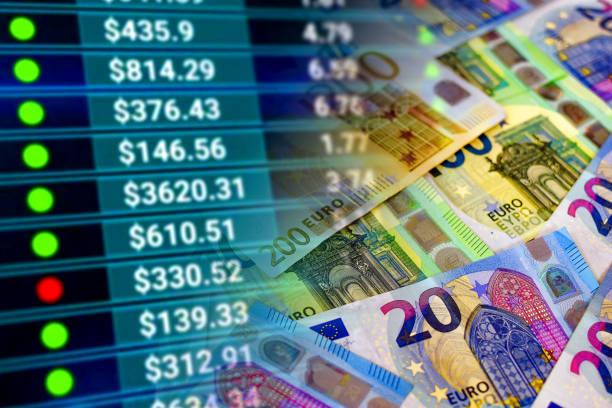
For traders who thrive on volatility, the economic calendar is not a suggestion—it is a weapon. On ForexTrades.net, we emphasize that news-driven trading is not about guessing; it is about anticipating how specific data releases will shift supply and demand for currencies. To master event trading, you must understand the fundamental forces that move exchange rates when headlines break. This article dissects the five primary factors that create the predictable, exploitable volatility that defines high-impact news events.
The first and most powerful driver of exchange rate fluctuations is interest rate differentials and central bank policy expectations. When a major central bank like the Federal Reserve, the European Central Bank, or the Bank of Japan releases a rate decision, the market reacts instantaneously. Why? Because currency is a store of value, and higher interest rates attract capital seeking yield. The economic calendar item “Interest Rate Decision” is the single most anticipated event for a reason. However, the subtlety lies in the forward guidance. A rate hold is often less important than the language that follows. If the central bank signals a future tightening cycle, the currency rallies before the next meeting. Conversely, if the bank pivots dovish, the currency drops even if rates remain unchanged. Seasoned traders watch the calendar for the “dot plots” or economic projections that accompany these decisions, as they reveal the underlying sentiment that drives long-term trends.
The second critical factor is inflation data—specifically Consumer Price Index, Producer Price Index, and Core CPI figures. Inflation is the silent destroyer of purchasing power. When a country reports higher-than-expected inflation, the market assumes the central bank will be forced to raise rates more aggressively. This expectation immediately strengthens the currency. For example, a hot UK CPI print will push GBP/USD higher as traders price in a more hawkish Bank of England. The opposite is equally true: disinflation signals a weakening currency as it opens the door for rate cuts. On the calendar, inflation releases are often accompanied by extreme volatility because they are backward-looking but forward-shaping. You can trade this by entering positions seconds after the headline number crosses the wires, but only if you have a clear bias based on the forecast versus actual delta.
Third, employment data—specifically Non-Farm Payrolls from the U.S., but also unemployment rates and wage growth figures globally—directly impacts exchange rates. A healthy labor market suggests economic resilience, which fuels consumer spending and corporate profits. This, in turn, leads to stronger GDP growth and higher yields, attracting foreign capital. The NFP release, typically the first Friday of every month, is notorious for whipsawing pairs like EUR/USD. However, the nuance is in the participation rate and average hourly earnings. A low unemployment rate that is accompanied by stagnant wages is less bullish for the currency than one with rising wages, as wage inflation feeds into core CPI. Traders who only look at the headline job number miss the real story. The economic calendar preparation should include reviewing the prior month’s revisions, as these often create second-wave moves hours after the initial spike.
Fourth, Gross Domestic Product and trade balance figures anchor long-term exchange rate trends. GDP growth shows the overall health of an economy, and currencies of growing economies tend to appreciate over time. But the event trader must understand the surprise element. A GDP release that beats expectations by 0.5% can trigger a sharp, short-term rally that lasts only minutes before algorithmic traders lock in profits. The trade balance matters because a surplus country (like Germany or Japan) generally sees its currency strengthen as foreign buyers need to purchase that currency to buy its goods. However, in the news trading context, these releases are slower burners. They are less volatile than CPI or NFP, but more reliable for setting a directional bias that lasts until the next major data point.
Finally, geopolitical risk, natural disasters, and sudden policy shocks create unquantifiable volatility that no calendar can fully predict. Yet, you can position for them. When a calendar event such as a central bank meeting or GDP release occurs during a period of political instability (elections, trade wars, or military conflicts), the exchange rate movement becomes amplified. For instance, a Brexit vote or a sudden tariff announcement can overwhelm any technical analysis. The savvy news trader observes the calendar for scheduled events that fall during these uncertain periods. A routine retail sales report becomes a catalyst when the market is already nervous. In this environment, the economic calendar is not just a list of releases—it is a risk map. You should always check for overlapping events, such as a Fed speech coinciding with a Eurozone CPI release, as these create multi-directional chaos that only the prepared can exploit.
In conclusion, the economic calendar is your blueprint for capitalizing on news-driven volatility. By focusing on how interest rate expectations, inflation, employment, GDP, and geopolitical shocks interact with exchange rates, you transform random market noise into a structured trading opportunity. Do not just look at the time of the release. Study the forecast, the prior figure, and the broader macro context. On ForexTrades.net, we teach that news trading is not gambling—it is reading the future through data. Master these five factors, and every red or green headline becomes a potential profit cycle.
Currency Quotes
EUR-USD


Current
1.0921Change
-0.0012
USD-JPY

Current
158.45Change
+0.22
GBP-USD

Current
1.2985Change
+0.0008
USD-CHF

Current
0.8842Change
-0.0005
AUD-USD

Current
0.6754Change
-0.0021
USD-CAD

Current
1.3688Change
+0.0015
NZD-USD

Current
0.6123Change
-0.0018
EUR-JPY
Current
173.05Change
+0.1
GBP-JPY
Current
205.74Change
+0.35
EUR-GBP
Current
0.8410Change
-0.0019
AUD-JPY
Current
107.03Change
-0.15
EUR-CHF
Current
0.9656Change
-0.0008
USD-CNY

Current
7.2514Change
+0.0002
USD-HKD

Current
7.8055Change
+0.0001
USD-SGD

Current
1.3442Change
+0.0004
USD-SEK

Current
10.5521Change
+0.021
USD-NOK

Current
10.7435Change
+0.0315
USD-DKK

Current
6.9452Change
+0.004
GBP-CHF
Current
1.1481Change
+0.0003
AUD-CAD
Current
0.9244Change
-0.0022
CAD-JPY
Current
115.76Change
+0.08
NZD-JPY
Current
97.02Change
-0.05
CHF-JPY
Current
179.20Change
+0.25
EUR-CAD
Current
1.4948Change
+0.0005
GBP-CAD
Current
1.7773Change
+0.0025
AUD-CHF
Current
0.5972Change
-0.002
NZD-CHF
Current
0.5414Change
-0.0016
CAD-CHF
Current
0.6460Change
-0.0004
EUR-AUD
Current
1.6170Change
+0.0015
GBP-AUD
Current
1.9225Change
+0.0045
EUR-NZD
Current
1.7836Change
+0.002
GBP-NZD
Current
2.1206Change
+0.005
AUD-NZD
Current
1.1030Change
-0.0005
USD-MXN

Current
17.6520Change
+0.051
USD-ZAR

Current
18.2540Change
-0.082
USD-TRY

Current
33.1550Change
+0.024
USD-INR

Current
83.6210Change
+0.011
USD-BRL

Current
5.4820Change
-0.031
USD-KRW

Current
1378.45Change
+2.15
USD-PLN

Current
3.9650Change
-0.005
USD-HUF

Current
362.45Change
+0.85
USD-CZK

Current
23.1250Change
+0.035
USD-ILS

Current
3.6840Change
-0.008
USD-CLP

Current
945.20Change
+2.1
USD-PHP

Current
58.75Change
+0.12
USD-THB

Current
36.15Change
+0.05
USD-IDR

Current
16180.00Change
+25
USD-MYR

Current
4.6850Change
-0.002
USD-VND

Current
25450.00Change
+5
USD-RUB

Current
88.50Change
+0.25
EUR-MXN
Current
19.1365Change
+0.025