
Exotic pairs with emerging economies

Most retail forex traders gravitate toward the familiar—EUR/USD, GBP/JPY, USD/CHF. These major and minor pairs offer liquidity, tight spreads, and a wealth of historical data. But for those who have already mastered the basics and are seeking asymmetric return profiles, exotic currency pairs tied to emerging economies present a distinct, high-conviction arena. This is not gambling. This is informed speculation on the macroeconomic trajectories of nations that are structurally mispriced by the broader market. Understanding exotic pairs is essential for any trader who wants to move beyond the noise of central bank gossip and into genuine cross-border capital flow analysis.
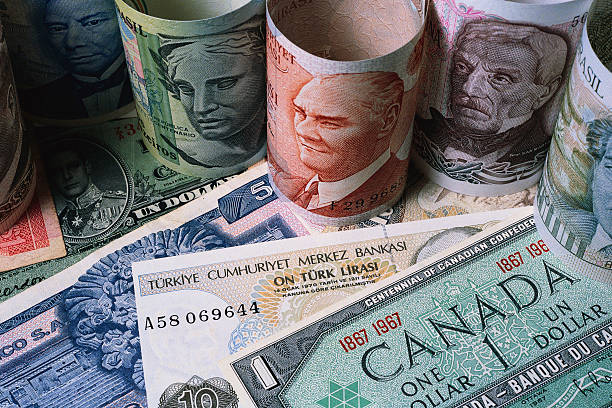
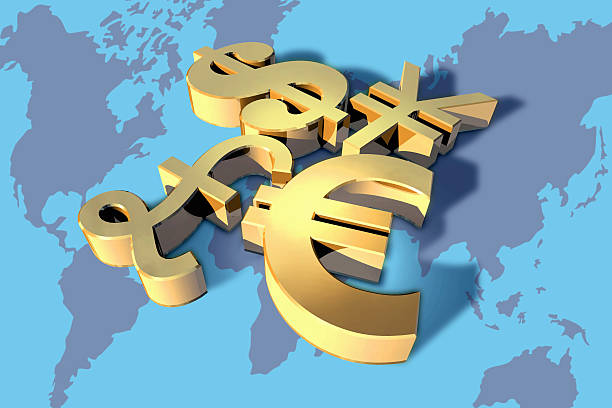
Exotic pairs are defined by the inclusion of one major currency—usually the US dollar, euro, or Japanese yen—paired with the currency of a developing or frontier economy. Think USD/TRY (Turkish lira), USD/ZAR (South African rand), USD/BRL (Brazilian real), or EUR/TRY. These pairs are not for the faint of heart. Their spreads can be ten to twenty times wider than those on majors. Liquidity is thin, especially during off-hours, and slippage can erase gains in a single heartbeat. But precisely because of these frictions, they offer opportunities that cannot be found in the smoothed-out, algorithm-drenched world of G10 currencies.
The first reality you must internalize when trading exotics is that technical analysis alone is insufficient. Chart patterns on daily USD/TRY candles are often overwhelmed by sudden policy interventions or capital controls. Emerging market central banks do not operate with the same transparency as the Fed or the ECB. Reserve management, political interference, and sudden changes in foreign investment laws can spike volatility in ways that no moving average can predict. Therefore, success in exotic pairs demands a fundamental, top-down approach. You need to understand the current account balance, the inflation trajectory, and the real interest rate differential of the emerging economy. More importantly, you need to watch for sovereign CDS spreads, IMF program negotiations, and any sign of geopolitical instability.
Take USD/ZAR as a case study. South Africa’s rand is heavily influenced by commodity prices, especially gold and platinum. But it is also highly sensitive to domestic political risk, power grid failures, and changes in Chinese demand. A trader who only looks at the daily RSI and Bollinger Bands when trading dollar-rand is missing the bigger picture. The exotic pair trader must read S&P and Moody’s outlooks, follow Eskom’s load-shedding schedule, and track South Africa’s terms of trade. This is not easy, but it is what separates the informed speculator from the gambler.
Another critical consideration is carry trade dynamics. Exotic currencies often offer dramatically higher interest rates than their major counterparts. The Turkish lira, despite its chronic depreciation, once offered overnight rates in the double digits. This creates a natural temptation to buy the TRY against the dollar or euro for the yield. But the carry trade on exotics is a double-edged sword. The high yield is compensation for depreciation risk. If the emerging economy’s currency weakens by more than the yield differential, you lose principal. The trick is to identify moments when the carry is unusually high relative to the implied volatility. This requires understanding the forward premium and the real exchange rate. If a country’s real exchange rate is significantly undervalued by purchasing power parity metrics, and the central bank is committed to real positive interest rates, the carry trade becomes a high-probability setup. If not, you are simply catching a falling knife.
Risk management on exotic pairs must be more conservative than for majors. Because spreads are wide and stop-losses are prone to being hit by intraday spikes, you should position-size accordingly. A 2% risk per trade on EUR/USD might be manageable. On USD/TRY, it could blow your account in a week. Use a fraction of that—0.5% or less—and allow for wider stops to accommodate the noise. Also, avoid holding exotic positions over weekends or during local holidays. Political events in emerging markets rarely break during trading hours in New York. They happen on Sunday night in Istanbul or Wednesday afternoon in Brasília, when liquidity is gone.
Finally, do not confuse exotic pairs with pure speculation. Many of the world’s most successful macro funds have built entire strategies around emerging market FX. They employ teams of analysts who track inflation reports, monitor central bank independence, and calculate real effective exchange rates. As a retail trader, you cannot replicate that infrastructure. But you can specialize. Pick two or three exotic pairs—perhaps the rand, the Mexican peso, and the Indian rupee—and learn everything about their drivers. Build a notebook of how they reacted to past oil shocks, elections, and trade disputes. Over time, you will develop an intuition that no algorithmic model can replicate. Exotic pairs are the frontier of forex. They reward preparation, patience, and resilience. They punish laziness and greed. If you are ready for that trade-off, step forward. If not, stay with the majors.