

- USD-JPY 158.45 (+0.22 )
- GBP-USD 1.2985 (+0.0008 )
- USD-CHF 0.8842 (-0.0005 )
- AUD-USD 0.6754 (-0.0021 )
- USD-CAD 1.3688 (+0.0015 )
- NZD-USD 0.6123 (-0.0018 )
- EUR-JPY 173.05 (+0.1 )
- GBP-JPY 205.74 (+0.35 )
- EUR-GBP 0.8410 (-0.0019 )
- AUD-JPY 107.03 (-0.15 )
- EUR-CHF 0.9656 (-0.0008 )
- USD-CNY 7.2514 (+0.0002 )
- USD-HKD 7.8055 (+0.0001 )
- USD-SGD 1.3442 (+0.0004 )
- USD-SEK 10.5521 (+0.021 )
- USD-NOK 10.7435 (+0.0315 )
- USD-DKK 6.9452 (+0.004 )
- GBP-CHF 1.1481 (+0.0003 )
- AUD-CAD 0.9244 (-0.0022 )
- CAD-JPY 115.76 (+0.08 )
- NZD-JPY 97.02 (-0.05 )
- CHF-JPY 179.20 (+0.25 )
- EUR-CAD 1.4948 (+0.0005 )
- GBP-CAD 1.7773 (+0.0025 )
- AUD-CHF 0.5972 (-0.002 )
- NZD-CHF 0.5414 (-0.0016 )
- CAD-CHF 0.6460 (-0.0004 )
- EUR-AUD 1.6170 (+0.0015 )
- GBP-AUD 1.9225 (+0.0045 )
- EUR-NZD 1.7836 (+0.002 )
- GBP-NZD 2.1206 (+0.005 )
- AUD-NZD 1.1030 (-0.0005 )
- USD-MXN 17.6520 (+0.051 )
- USD-ZAR 18.2540 (-0.082 )
- USD-TRY 33.1550 (+0.024 )
- USD-INR 83.6210 (+0.011 )
- USD-BRL 5.4820 (-0.031 )
- USD-KRW 1378.45 (+2.15 )
- USD-PLN 3.9650 (-0.005 )
- USD-HUF 362.45 (+0.85 )
- USD-CZK 23.1250 (+0.035 )
- USD-ILS 3.6840 (-0.008 )
- USD-CLP 945.20 (+2.1 )
- USD-PHP 58.75 (+0.12 )
- USD-THB 36.15 (+0.05 )
- USD-IDR 16180.00 (+25 )
- USD-MYR 4.6850 (-0.002 )
- USD-VND 25450.00 (+5 )
- USD-RUB 88.50 (+0.25 )
- EUR-MXN 19.1365 (+0.025 )
- EUR-ZAR 19.7750 (-0.11 )
- EUR-TRY 35.9150 (+0.045 )
- EUR-PLN 4.2980 (-0.006 )
- EUR-HUF 392.85 (+0.65 )
- EUR-CZK 25.0560 (+0.015 )
- GBP-MXN 22.7750 (+0.065 )
- GBP-ZAR 23.5420 (-0.12 )
- GBP-TRY 42.7560 (+0.085 )
- GBP-PLN 5.1180 (-0.002 )
- AUD-CNY 4.9015 (-0.012 )
- AUD-HKD 5.2725 (-0.015 )
- AUD-SGD 0.9078 (-0.0025 )
- CAD-CNY 5.2975 (+0.008 )
- CAD-HKD 5.6980 (+0.005 )
- CAD-SGD 0.9815 (+0.0012 )
- NZD-CNY 4.4395 (-0.011 )
- NZD-HKD 4.7750 (-0.014 )
- NZD-SGD 0.8226 (-0.0022 )
- CHF-CNY 8.1990 (-0.004 )
- CHF-HKD 8.8185 (-0.0035 )
- CHF-SGD 1.5185 (-0.0005 )
- JPY-CNY 0.0458 (-0.0001 )
- JPY-HKD 0.0493 (-0.0001 )
- JPY-SGD 0.0085 (-0.0001 )
- EUR-SGD 1.4682 (-0.001 )
- GBP-SGD 1.7458 (+0.0015 )
- EUR-HKD 8.5285 (-0.009 )
- GBP-HKD 10.1385 (+0.0055 )
- EUR-CNY 7.9195 (-0.008 )
- GBP-CNY 9.4185 (+0.005 )
- USD-SAR 3.7505 (+0 )
- USD-AED 3.6730 (+0 )
- USD-QAR 3.6410 (+0.0001 )
- USD-KWD 0.3065 (+0.0001 )
- EUR-SAR 4.0955 (-0.0045 )
- EUR-AED 4.0115 (-0.0044 )
- GBP-SAR 4.8705 (+0.003 )
- GBP-AED 4.7715 (+0.003 )
- AUD-SAR 2.5325 (-0.008 )
- AUD-AED 2.4810 (-0.0078 )
- CAD-SAR 5.1295 (+0.0055 )
- CAD-AED 5.0255 (+0.0055 )
- NZD-SAR 2.2965 (-0.0068 )
- NZD-AED 2.2495 (-0.0066 )
- CHF-SAR 3.3155 (-0.0018 )
- CHF-AED 3.2475 (-0.0018 )
- JPY-SAR 0.0237 (+0.0001 )
- JPY-AED 0.0232 (+0.0001 )
- EUR-DKK 7.4585 (-0.0005 )
Professional status may unlock higher leverage

In the foreign exchange market, leverage is the double-edged sword that separates retail traders from institutional professionals. While most casual investors encounter standard leverage caps of 30:1 or 50:1, a quiet but significant tier exists for those who can prove professional status. This distinction, rooted in regulatory frameworks like those enforced by the European Securities and Markets Authority and the Financial Conduct Authority, fundamentally alters the margin requirements and risk exposure available to a trader. Understanding how professional status unlocks higher leverage is not merely an academic exercise; it is a strategic advantage that directly impacts capital efficiency and trading outcomes.
The core mechanism at play is margin, the collateral required to open and maintain leveraged positions. For a retail trader operating under standard conditions, a 30:1 leverage ratio means that a $10,000 position requires roughly $333 in margin. A professional trader, by contrast, may access leverage of 100:1 or even 200:1, reducing the margin requirement to as little as $50 or $100 for the same notional exposure. This difference is not arbitrary. Regulators impose strict limits on retail leverage because they assume retail clients lack the capital, experience, or risk awareness to manage the amplified losses that high leverage can produce. Professional status, however, signals that the trader possesses sufficient financial resources, trading volume, or industry expertise to handle that risk without destabilizing the market or themselves.
To qualify as a professional client, a trader must typically meet at least two of three criteria established by MiFID II in Europe or similar regulations in other jurisdictions. These criteria include a portfolio size exceeding €500,000, a record of significant trading activity averaging ten or more transactions per quarter over the previous year, and professional experience in the financial sector for at least one year. Brokerages vary in how strictly they verify these conditions. Some require documented proof from accountants or broker statements, while others offer a self-certification process that carries its own legal weight. The key insight for advanced traders is that this threshold is not a barrier but a gate that can be deliberately opened with proper planning.
The implications for margin management are profound. Higher leverage does not mean more risk per se; it means that a trader with a well-defined strategy can allocate less capital to margin and more to diversified positions or risk buffers. For example, a professional trader running a scalping strategy on EUR/USD may need to hold multiple positions simultaneously. With retail leverage, the margin required might consume 30% of the account, leaving little room for drawdowns. With professional leverage, that same margin requirement drops to 5%, allowing the trader to maintain the same exposure while keeping 95% of capital aside for volatility spikes or stop-loss adjustments. This is not about taking bigger bets; it is about optimizing the balance between market exposure and reserve capital.
However, there is a critical nuance that separates competent professionals from reckless gamblers. Higher leverage amplifies losses just as efficiently as it amplifies gains. A 1% move against a position with 100:1 leverage results in a 100% loss of margin if no stop-loss is in place. This is why brokerages that offer professional-tier leverage also require strict margin call policies and may even implement negative balance protection for retail but not professional accounts. A professional trader accepts that they are fully liable for any negative balance, which is a risk that retail clients are often shielded from. Therefore, unlocking higher leverage requires not just paperwork but a demonstrable understanding of position sizing, volatility forecasting, and margin maintenance.
Another layer of complexity arises when comparing leverage across different brokerages. Not all brokers interpret professional status identically. Offshore brokers, for instance, may offer unlimited leverage regardless of client status, but they also operate outside major regulatory frameworks, exposing traders to risks like counterparty default or uninsured funds. Conversely, regulated brokers in the UK, EU, or Australia impose professional leverage caps that usually do not exceed 200:1, and they require annual re-certification of professional status. A trader operating across multiple brokerages must therefore maintain consistent documentation and be prepared for different margin requirements on similar currency pairs.
The practical path forward involves more than simply checking a box. A trader seeking professional status should first audit their own trading history and financial portfolio to confirm they can meet the criteria. Then, they should approach their current broker or a new one that explicitly offers professional client designation. During the application process, it is essential to request the specific margin schedules for the currency pairs traded, as some brokers apply different leverage limits to major pairs, minors, and exotics. Once approved, the trader must recalibrate their risk management. A 50:1 leverage account cannot be scaled directly to 200:1 without adjusting position sizes and stop distances. The margin freed up should be treated as a liquidity reserve, not as an invitation to quadruple trade volume.
In conclusion, professional status is not a badge of exclusivity; it is a contractual acknowledgment of capacity. It unlocks higher leverage by shifting the risk burden from the broker to the trader, based on objective financial and experiential criteria. For the advanced trader who understands margin dynamics, this shift provides a tangible edge in capital allocation and strategic flexibility. But the edge only exists for those who respect that higher leverage demands higher discipline. Across brokerages, the difference between a professional and a retail account is not just a number on a screen; it is a fundamental change in how margin is calculated, how risk is managed, and how profits can be systematically extracted from the foreign exchange markets.

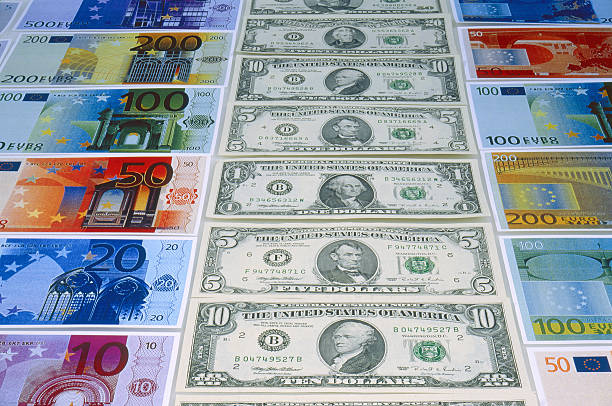



Currency Quotes
EUR-USD


Current
1.0921Change
-0.0012
USD-JPY

Current
158.45Change
+0.22
GBP-USD

Current
1.2985Change
+0.0008
USD-CHF

Current
0.8842Change
-0.0005
AUD-USD

Current
0.6754Change
-0.0021
USD-CAD

Current
1.3688Change
+0.0015
NZD-USD

Current
0.6123Change
-0.0018
EUR-JPY
Current
173.05Change
+0.1
GBP-JPY
Current
205.74Change
+0.35
EUR-GBP
Current
0.8410Change
-0.0019
AUD-JPY
Current
107.03Change
-0.15
EUR-CHF
Current
0.9656Change
-0.0008
USD-CNY

Current
7.2514Change
+0.0002
USD-HKD

Current
7.8055Change
+0.0001
USD-SGD

Current
1.3442Change
+0.0004
USD-SEK

Current
10.5521Change
+0.021
USD-NOK

Current
10.7435Change
+0.0315
USD-DKK

Current
6.9452Change
+0.004
GBP-CHF
Current
1.1481Change
+0.0003
AUD-CAD
Current
0.9244Change
-0.0022
CAD-JPY
Current
115.76Change
+0.08
NZD-JPY
Current
97.02Change
-0.05
CHF-JPY
Current
179.20Change
+0.25
EUR-CAD
Current
1.4948Change
+0.0005
GBP-CAD
Current
1.7773Change
+0.0025
AUD-CHF
Current
0.5972Change
-0.002
NZD-CHF
Current
0.5414Change
-0.0016
CAD-CHF
Current
0.6460Change
-0.0004
EUR-AUD
Current
1.6170Change
+0.0015
GBP-AUD
Current
1.9225Change
+0.0045
EUR-NZD
Current
1.7836Change
+0.002
GBP-NZD
Current
2.1206Change
+0.005
AUD-NZD
Current
1.1030Change
-0.0005
USD-MXN

Current
17.6520Change
+0.051
USD-ZAR

Current
18.2540Change
-0.082
USD-TRY

Current
33.1550Change
+0.024
USD-INR

Current
83.6210Change
+0.011
USD-BRL

Current
5.4820Change
-0.031
USD-KRW

Current
1378.45Change
+2.15
USD-PLN

Current
3.9650Change
-0.005
USD-HUF

Current
362.45Change
+0.85
USD-CZK

Current
23.1250Change
+0.035
USD-ILS

Current
3.6840Change
-0.008
USD-CLP

Current
945.20Change
+2.1
USD-PHP

Current
58.75Change
+0.12
USD-THB

Current
36.15Change
+0.05
USD-IDR

Current
16180.00Change
+25
USD-MYR

Current
4.6850Change
-0.002
USD-VND

Current
25450.00Change
+5
USD-RUB

Current
88.50Change
+0.25
EUR-MXN
Current
19.1365Change
+0.025