
Risk-on sentiment favors high-yield currencies
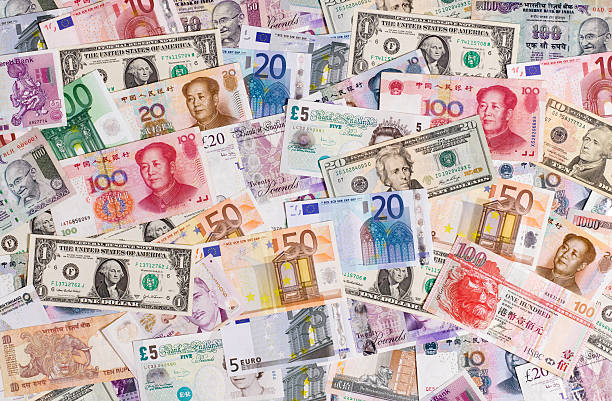
In the foreign exchange market, the relationship between risk appetite and currency valuation is not merely academic—it is a daily driver of price action that separates informed traders from those caught on the wrong side of sentiment shifts. When market participants feel optimistic about global growth, geopolitical stability, and corporate earnings, they engage in what is commonly called risk-on behavior. This psychological pivot has a direct and often predictable effect on exchange rates, specifically boosting high-yield currencies while punishing traditional safe havens.
High-yield currencies are typically those offered by countries with higher interest rates, such as the Australian dollar, New Zealand dollar, South African rand, and Brazilian real. These currencies attract capital when investors are willing to assume greater risk because the potential returns from carry trades and speculative positions outweigh the perceived dangers of volatility or sudden reversals. The mechanism is straightforward: when risk appetite is elevated, capital flows out of low-yielding, liquid assets like the US dollar, Japanese yen, and Swiss franc, and into currencies where central bank rates offer better compensation for holding the position.
This dynamic underscores one of the most important factors influencing exchange rates: market sentiment and risk appetite. Unlike fundamental drivers such as trade balances, inflation differentials, or central bank policy alone, sentiment can override data in the short to medium term. A strong employment report in the United States may be ignored if a simultaneous geopolitical shock triggers a risk-off mood that drives the dollar higher regardless. Conversely, a mediocre gross domestic product figure from Australia might be overlooked if a broad risk-on wave pushes the Australian dollar higher against the yen simply because traders are chasing yield.
To understand why high-yield currencies benefit disproportionately during risk-on periods, you must consider the carry trade. In its simplest form, a carry trade involves borrowing a low-interest-rate currency, such as the Japanese yen, and investing in a high-yield currency, such as the Mexican peso, to capture the interest rate differential. When sentiment is positive, traders are more comfortable levering these positions and holding them overnight. The increased demand for the high-yield currency pushes its exchange rate upward. But the effect is compounded by the unwinding of safe-haven positions. During risk-off episodes, the same traders rush to close carry trades, repatriating borrowed yen and causing the high-yield currency to fall sharply. Therefore, risk sentiment acts as a gating factor for the entire carry trade ecosystem.
Another critical factor is the correlation between commodity prices and high-yield currencies. Many high-yield currencies belong to commodity-exporting nations. The Australian dollar, for instance, is closely tied to iron ore and coal prices, while the Canadian dollar follows crude oil. During risk-on periods, demand for commodities typically rises alongside equity markets, which bolsters the terms of trade for these countries and supports their currencies. This creates a self-reinforcing loop: rising commodity prices improve economic prospects, which encourages central banks to maintain or increase interest rates, which attracts more carry trade interest, which further strengthens the currency.
However, traders must be careful not to conflate risk appetite with fundamental strength. A high-yield currency can rally sharply during a risk-on phase even if its underlying economy is deteriorating, provided the global mood remains buoyant. The South African rand is a textbook example. On paper, South Africa faces structural challenges including high unemployment, political uncertainty, and persistent power shortages. Yet during a global risk-on rally, the rand can deliver outsized returns simply because its high interest rate attracts speculative capital. This means that relying solely on yield as a trading signal without monitoring sentiment indicators is a recipe for disaster.
Professional traders gauge risk appetite through several real-time tools. The VIX index, often called the fear gauge, is a proxy for equity market volatility and tends to move inversely with risk appetite. Currency correlation matrices help identify which pairs are behaving as risk-on or risk-off proxies. The USD/JPY pair, for example, often falls during risk-off episodes and rises during risk-on periods because the yen is a funding currency. The AUD/USD and NZD/USD pairs typically move in the opposite direction to the VIX. Monitoring credit spreads and emerging market bond yields also provides clues about whether risk appetite is expanding or contracting.
For the practical trader, the lesson is clear: do not trade high-yield currencies solely based on budget forecasts or central bank statements. First, assess the prevailing sentiment regime. If global news is dominated by trade disputes, military tensions, or banking stress, high-yield currencies will struggle regardless of local interest rate advantages. Conversely, when headlines celebrate economic recovery, corporate earnings beats, or dovish central bank pivots in major economies, it is time to favor the currencies that reward you for taking risk.
Understanding risk-on sentiment as a factor influencing exchange rates is not about predicting the future—it is about reading the present mood of the market and positioning accordingly. High-yield currencies offer tempting returns, but they exact a heavy price from those who ignore the crowd psychology that moves them.