

- USD-JPY 158.45 (+0.22 )
- GBP-USD 1.2985 (+0.0008 )
- USD-CHF 0.8842 (-0.0005 )
- AUD-USD 0.6754 (-0.0021 )
- USD-CAD 1.3688 (+0.0015 )
- NZD-USD 0.6123 (-0.0018 )
- EUR-JPY 173.05 (+0.1 )
- GBP-JPY 205.74 (+0.35 )
- EUR-GBP 0.8410 (-0.0019 )
- AUD-JPY 107.03 (-0.15 )
- EUR-CHF 0.9656 (-0.0008 )
- USD-CNY 7.2514 (+0.0002 )
- USD-HKD 7.8055 (+0.0001 )
- USD-SGD 1.3442 (+0.0004 )
- USD-SEK 10.5521 (+0.021 )
- USD-NOK 10.7435 (+0.0315 )
- USD-DKK 6.9452 (+0.004 )
- GBP-CHF 1.1481 (+0.0003 )
- AUD-CAD 0.9244 (-0.0022 )
- CAD-JPY 115.76 (+0.08 )
- NZD-JPY 97.02 (-0.05 )
- CHF-JPY 179.20 (+0.25 )
- EUR-CAD 1.4948 (+0.0005 )
- GBP-CAD 1.7773 (+0.0025 )
- AUD-CHF 0.5972 (-0.002 )
- NZD-CHF 0.5414 (-0.0016 )
- CAD-CHF 0.6460 (-0.0004 )
- EUR-AUD 1.6170 (+0.0015 )
- GBP-AUD 1.9225 (+0.0045 )
- EUR-NZD 1.7836 (+0.002 )
- GBP-NZD 2.1206 (+0.005 )
- AUD-NZD 1.1030 (-0.0005 )
- USD-MXN 17.6520 (+0.051 )
- USD-ZAR 18.2540 (-0.082 )
- USD-TRY 33.1550 (+0.024 )
- USD-INR 83.6210 (+0.011 )
- USD-BRL 5.4820 (-0.031 )
- USD-KRW 1378.45 (+2.15 )
- USD-PLN 3.9650 (-0.005 )
- USD-HUF 362.45 (+0.85 )
- USD-CZK 23.1250 (+0.035 )
- USD-ILS 3.6840 (-0.008 )
- USD-CLP 945.20 (+2.1 )
- USD-PHP 58.75 (+0.12 )
- USD-THB 36.15 (+0.05 )
- USD-IDR 16180.00 (+25 )
- USD-MYR 4.6850 (-0.002 )
- USD-VND 25450.00 (+5 )
- USD-RUB 88.50 (+0.25 )
- EUR-MXN 19.1365 (+0.025 )
- EUR-ZAR 19.7750 (-0.11 )
- EUR-TRY 35.9150 (+0.045 )
- EUR-PLN 4.2980 (-0.006 )
- EUR-HUF 392.85 (+0.65 )
- EUR-CZK 25.0560 (+0.015 )
- GBP-MXN 22.7750 (+0.065 )
- GBP-ZAR 23.5420 (-0.12 )
- GBP-TRY 42.7560 (+0.085 )
- GBP-PLN 5.1180 (-0.002 )
- AUD-CNY 4.9015 (-0.012 )
- AUD-HKD 5.2725 (-0.015 )
- AUD-SGD 0.9078 (-0.0025 )
- CAD-CNY 5.2975 (+0.008 )
- CAD-HKD 5.6980 (+0.005 )
- CAD-SGD 0.9815 (+0.0012 )
- NZD-CNY 4.4395 (-0.011 )
- NZD-HKD 4.7750 (-0.014 )
- NZD-SGD 0.8226 (-0.0022 )
- CHF-CNY 8.1990 (-0.004 )
- CHF-HKD 8.8185 (-0.0035 )
- CHF-SGD 1.5185 (-0.0005 )
- JPY-CNY 0.0458 (-0.0001 )
- JPY-HKD 0.0493 (-0.0001 )
- JPY-SGD 0.0085 (-0.0001 )
- EUR-SGD 1.4682 (-0.001 )
- GBP-SGD 1.7458 (+0.0015 )
- EUR-HKD 8.5285 (-0.009 )
- GBP-HKD 10.1385 (+0.0055 )
- EUR-CNY 7.9195 (-0.008 )
- GBP-CNY 9.4185 (+0.005 )
- USD-SAR 3.7505 (+0 )
- USD-AED 3.6730 (+0 )
- USD-QAR 3.6410 (+0.0001 )
- USD-KWD 0.3065 (+0.0001 )
- EUR-SAR 4.0955 (-0.0045 )
- EUR-AED 4.0115 (-0.0044 )
- GBP-SAR 4.8705 (+0.003 )
- GBP-AED 4.7715 (+0.003 )
- AUD-SAR 2.5325 (-0.008 )
- AUD-AED 2.4810 (-0.0078 )
- CAD-SAR 5.1295 (+0.0055 )
- CAD-AED 5.0255 (+0.0055 )
- NZD-SAR 2.2965 (-0.0068 )
- NZD-AED 2.2495 (-0.0066 )
- CHF-SAR 3.3155 (-0.0018 )
- CHF-AED 3.2475 (-0.0018 )
- JPY-SAR 0.0237 (+0.0001 )
- JPY-AED 0.0232 (+0.0001 )
- EUR-DKK 7.4585 (-0.0005 )
Based on long-term macroeconomic trends

Position trading in the foreign exchange market is not about chasing daily noise or reacting to headlines. It is about aligning your trades with the dominant macroeconomic currents that shape currency valuations over months and years. For the long-term investor, this approach offers a distinct advantage: the ability to capture substantial price moves while minimizing the emotional and transactional costs of short-term trading. The key is to understand that currency pairs are not merely speculative instruments; they are reflections of relative economic health, monetary policy divergence, and structural shifts in global capital flows.
The foundation of any successful position trading strategy lies in identifying and interpreting long-term macroeconomic trends. These trends are driven by variables that move slowly but with immense force: interest rate differentials, inflation trajectories, trade balances, fiscal policy stances, and demographic shifts. For example, a central bank that consistently raises interest rates to combat inflation while its trading partners maintain accommodative policy creates a clear directional bias for that currency to appreciate. This is not a trade that requires daily monitoring; it is a thesis that plays out over quarters and years. The position trader’s job is to enter when the trend is confirmed by multiple timeframes and to hold until the macroeconomic fundamentals change.
Risk management becomes paramount in this context. Because position trades involve larger time horizons and wider stop-losses, capital preservation cannot be an afterthought. The prudent investor allocates no more than a small percentage of total portfolio equity to any single currency pair, typically between one and three percent. Stop-loss orders should be placed at levels that invalidate the macroeconomic thesis, not at arbitrary technical levels. If the Reserve Bank of Australia is hiking rates while the Federal Reserve is cutting, and the Australian dollar begins to weaken against the dollar, that is a red flag that your thesis is broken. Exit immediately, regardless of the loss. There is no room for hope in position trading; only for data-driven discipline.
One of the most effective frameworks for long-term currency trading is the carry trade, but only when executed with awareness of its risks. A carry trade involves buying a currency with a high interest rate and selling a currency with a low interest rate, profiting from the daily rollover interest in addition to potential capital appreciation. However, this strategy can be devastating during risk-off events or when the high-yielding currency’s economy deteriorates. The position trader must therefore combine carry with trend confirmation. For instance, if the Japanese yen has been kept artificially weak through ultra-loose monetary policy while the U.S. dollar benefits from aggressive rate hikes, a long USD/JPY position captures both interest income and trend appreciation. But if the Bank of Japan signals a policy shift, the trade must be closed immediately, even if the carry still looks attractive.
Another powerful tool is the use of moving averages on weekly and monthly charts to define the trend’s health. A 50-week exponential moving average crossing above a 200-week moving average signals a long-term bullish bias, while the opposite signals bearishness. These crossovers occur infrequently but with high reliability when confirmed by macroeconomic data. The position trader should not enter on the crossover alone; instead, wait for a pullback to the moving average that aligns with the dominant trend. This reduces the risk of entering at an overextended price.
Economic calendar awareness is essential, but not for the reasons short-term traders might think. Position traders do not trade on non-farm payrolls or CPI releases. Instead, they use these events to validate or challenge their long-term thesis. A series of disappointing employment reports in a country expected to raise rates is a warning sign. Conversely, a string of better-than-expected inflation data in a weakening economy can signal a turning point. The position trader reads these releases as pieces of a larger puzzle, not as triggers for immediate action.
Finally, the psychological discipline required for position trading cannot be overstated. You will endure drawdowns that last weeks. You will watch short-term traders brag about small gains while your trade remains underwater. The only cure is a rock-solid belief in your macroeconomic analysis and a clear plan for exit when that analysis proves wrong. Keep a trading journal specifically for macro thesis statements. Write down why you entered each trade, the data points you are watching, and the conditions that would force you to exit. When emotions flare, refer back to that journal.
Position trading for long-term investors is not a shortcut to wealth. It is a methodical, data-intensive, and patient approach to capitalizing on the slow-moving forces that drive currency markets. By focusing on macroeconomic trends, rigorous risk management, and disciplined execution, you can build a portfolio of trades that reflect the real economic world rather than the fleeting sentiments of the trading floor. The profits are not instant, but they are sustainable. And in the foreign exchange market, sustainability is the ultimate edge.


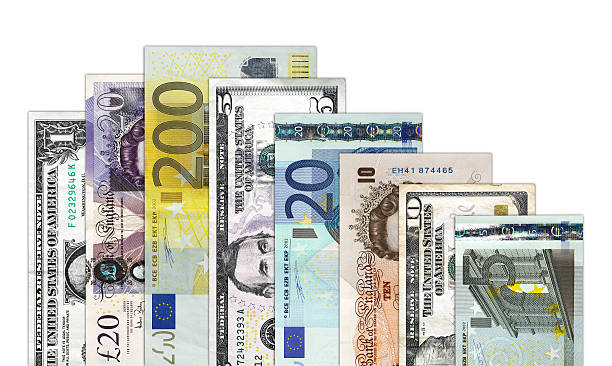


Currency Quotes
EUR-USD


Current
1.0921Change
-0.0012
USD-JPY

Current
158.45Change
+0.22
GBP-USD

Current
1.2985Change
+0.0008
USD-CHF

Current
0.8842Change
-0.0005
AUD-USD

Current
0.6754Change
-0.0021
USD-CAD

Current
1.3688Change
+0.0015
NZD-USD

Current
0.6123Change
-0.0018
EUR-JPY
Current
173.05Change
+0.1
GBP-JPY
Current
205.74Change
+0.35
EUR-GBP
Current
0.8410Change
-0.0019
AUD-JPY
Current
107.03Change
-0.15
EUR-CHF
Current
0.9656Change
-0.0008
USD-CNY

Current
7.2514Change
+0.0002
USD-HKD

Current
7.8055Change
+0.0001
USD-SGD

Current
1.3442Change
+0.0004
USD-SEK

Current
10.5521Change
+0.021
USD-NOK

Current
10.7435Change
+0.0315
USD-DKK

Current
6.9452Change
+0.004
GBP-CHF
Current
1.1481Change
+0.0003
AUD-CAD
Current
0.9244Change
-0.0022
CAD-JPY
Current
115.76Change
+0.08
NZD-JPY
Current
97.02Change
-0.05
CHF-JPY
Current
179.20Change
+0.25
EUR-CAD
Current
1.4948Change
+0.0005
GBP-CAD
Current
1.7773Change
+0.0025
AUD-CHF
Current
0.5972Change
-0.002
NZD-CHF
Current
0.5414Change
-0.0016
CAD-CHF
Current
0.6460Change
-0.0004
EUR-AUD
Current
1.6170Change
+0.0015
GBP-AUD
Current
1.9225Change
+0.0045
EUR-NZD
Current
1.7836Change
+0.002
GBP-NZD
Current
2.1206Change
+0.005
AUD-NZD
Current
1.1030Change
-0.0005
USD-MXN

Current
17.6520Change
+0.051
USD-ZAR

Current
18.2540Change
-0.082
USD-TRY

Current
33.1550Change
+0.024
USD-INR

Current
83.6210Change
+0.011
USD-BRL

Current
5.4820Change
-0.031
USD-KRW

Current
1378.45Change
+2.15
USD-PLN

Current
3.9650Change
-0.005
USD-HUF

Current
362.45Change
+0.85
USD-CZK

Current
23.1250Change
+0.035
USD-ILS

Current
3.6840Change
-0.008
USD-CLP

Current
945.20Change
+2.1
USD-PHP

Current
58.75Change
+0.12
USD-THB

Current
36.15Change
+0.05
USD-IDR

Current
16180.00Change
+25
USD-MYR

Current
4.6850Change
-0.002
USD-VND

Current
25450.00Change
+5
USD-RUB

Current
88.50Change
+0.25
EUR-MXN
Current
19.1365Change
+0.025